

November 2007
Billie Silvey
| Four Romantic Artists |
Francisco de Goya (1746-1828)
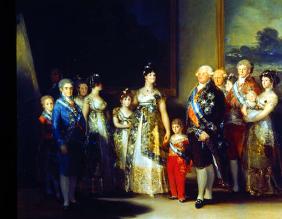
The Spaniard Goya expressed the democratic ideals of the
Romantic period by portraying the common coarseness of
the nobility and the nobility of common people. In 1800,
he painted Charles IV and the Royal Family with a
startling realism that displayed their smug stupidity. Goya
himself appears with his easel in the left background.
Romantic period by portraying the common coarseness of
the nobility and the nobility of common people. In 1800,
he painted Charles IV and the Royal Family with a
startling realism that displayed their smug stupidity. Goya
himself appears with his easel in the left background.
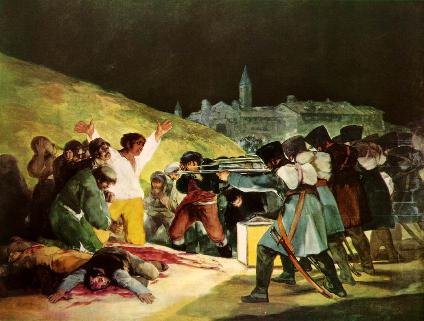
Napoleon’s troops occupied Madrid in 1808, setting up
his brother Joseph as ruler. From then until 1814, Spain was
in a continuous state of revolt. Goya’s statement on the
arrest and execution of innocent civilians is seen in a massive
painting, the Third of May 1814, which depicts the absurdity
of war. The anonymous soldiers are seen as a uniform row of
backs, while their victims form the expressive center of
attention in the painting.
his brother Joseph as ruler. From then until 1814, Spain was
in a continuous state of revolt. Goya’s statement on the
arrest and execution of innocent civilians is seen in a massive
painting, the Third of May 1814, which depicts the absurdity
of war. The anonymous soldiers are seen as a uniform row of
backs, while their victims form the expressive center of
attention in the painting.
Caspar David Friedrich (1774-1840)
Many of the major themes of
the Romantic movement are
evident in the art of the period.
The following four artists, from
different countries and decades,
and in differing styles,
demonstrate some of those
themes.
the Romantic movement are
evident in the art of the period.
The following four artists, from
different countries and decades,
and in differing styles,
demonstrate some of those
themes.
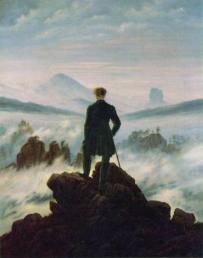
Friedrich was a landscape
painter. In his Wanderer
above the Sea of Fog, he
found his own way of glorifying
the individual by presenting him
against a backdrop of the
dramatic extremes of nature in
the Alps.
But his landscapes go beyond
the classical enjoyment of
beauty to a mystic expression of
the spiritual. As he put it, â
€œThe painter should paint not
only what he has in front of him,
but also what he sees inside
himself.�
painter. In his Wanderer
above the Sea of Fog, he
found his own way of glorifying
the individual by presenting him
against a backdrop of the
dramatic extremes of nature in
the Alps.
But his landscapes go beyond
the classical enjoyment of
beauty to a mystic expression of
the spiritual. As he put it, â
€œThe painter should paint not
only what he has in front of him,
but also what he sees inside
himself.�
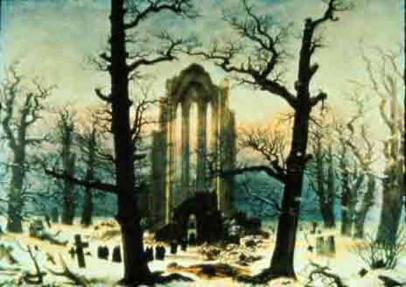
In his Cloister Cemetery in the Snow, Friedrich
combines the gothic theme of the Romantic period
with its preoccupation with death. He also expresses
his own religious sentiments.
combines the gothic theme of the Romantic period
with its preoccupation with death. He also expresses
his own religious sentiments.
Joseph Mallord William Turner (1775-1851)
Eugène Delacroix
(1798-1863)
(1798-1863)
His later paintings were often distinguished by a vortex in
which all revolves around a center point. His works
gradually grew less representative, pointing toward the
Impressionists to follow. Marked by extremes, they were
either calm and peaceful or driving and turbulent.
which all revolves around a center point. His works
gradually grew less representative, pointing toward the
Impressionists to follow. Marked by extremes, they were
either calm and peaceful or driving and turbulent.
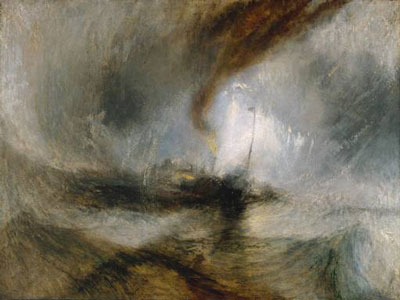
The English Turner also was a landscapist, but he
was less representational than Friedrich. Turner
was fascinated by the interplay of atmosphere and
light. His characteristic luminesence was achieved
by underlaying his paint with white as opposed to
black.
was less representational than Friedrich. Turner
was fascinated by the interplay of atmosphere and
light. His characteristic luminesence was achieved
by underlaying his paint with white as opposed to
black.
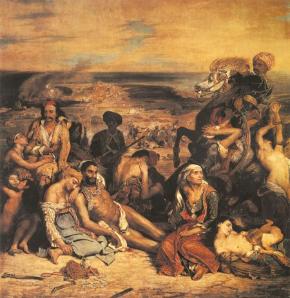
The French Delacroix was
perhaps the most Romantic
of the four. His paintings
are massive canvases, filled
with emotional figures. His
Massacre of Chios
represents the exotic theme
of Romantic art, with
distant lands and historical
references. At a time when
important paintings were
done in the style of the Old
Masters, this painting was
so unusual that it was
called "The Massacre of
Painting."
perhaps the most Romantic
of the four. His paintings
are massive canvases, filled
with emotional figures. His
Massacre of Chios
represents the exotic theme
of Romantic art, with
distant lands and historical
references. At a time when
important paintings were
done in the style of the Old
Masters, this painting was
so unusual that it was
called "The Massacre of
Painting."
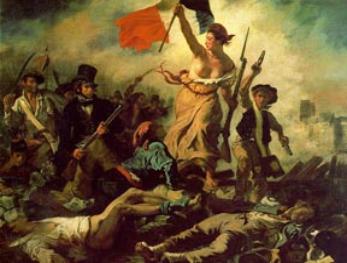
His Liberty Leading the People, his most distinctly French
work, celebrated the Revolution of 1830. It pays homage
to the Romantic theme of freedom, recalling that other
Lady Liberty, the statue sent as a gift from France to the
young United States.
work, celebrated the Revolution of 1830. It pays homage
to the Romantic theme of freedom, recalling that other
Lady Liberty, the statue sent as a gift from France to the
young United States.
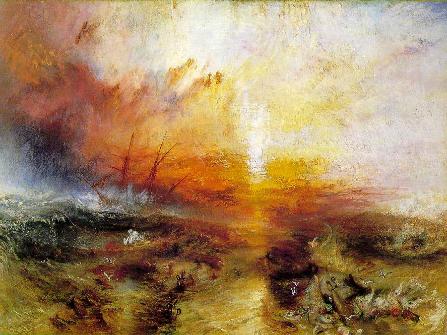
His Slave Ship suggests the horrors of slavery
and the slave trade in its litter of bodies, its sea
monsters in the foreground of the painting, and its
lurid sky.
and the slave trade in its litter of bodies, its sea
monsters in the foreground of the painting, and its
lurid sky.