

September 2008
Billie Silvey
A Christian Looks at
Religion in China
Religion in China


| Buddhism |
| Confucianism |
| Taoism |
Buddhism spread to China
from India along the silk road
during the Han dynasty.
Referred to as the golden man
(a reference to the golden
statues of Buddha), it was
adapted to the Chinese
culture of respect for family
and emperor. Emphasizing
the greater good rather than
the individual, its leaders were
wise government ministers
instead of monks or holy men.
It is said that Chinese wear a
Confucian hat, Taoist robes
and Buddhist sandals.
from India along the silk road
during the Han dynasty.
Referred to as the golden man
(a reference to the golden
statues of Buddha), it was
adapted to the Chinese
culture of respect for family
and emperor. Emphasizing
the greater good rather than
the individual, its leaders were
wise government ministers
instead of monks or holy men.
It is said that Chinese wear a
Confucian hat, Taoist robes
and Buddhist sandals.
Taoism, or the Way, is a philosophy, religion and basis of activity and
medicine aimed at increasing the flow of power. Representing 5,000
years of accumulated wisdom, it doesn't glorify the individual as a
separate being but as an element in the universe, interrelated with all
others. Tao means behavior or understanding. In a continually
changing universe, it represents the stability that results from a
harmony between Yin and Yang, the opposing but linked natural
forces.
Elements of Taoism include being alone with nature, seeking harmony,
and practicing tai chi and acupuncture to invite the chi in and remove
internal blocks to its flow. It produces humility, effortless action and
peace.
medicine aimed at increasing the flow of power. Representing 5,000
years of accumulated wisdom, it doesn't glorify the individual as a
separate being but as an element in the universe, interrelated with all
others. Tao means behavior or understanding. In a continually
changing universe, it represents the stability that results from a
harmony between Yin and Yang, the opposing but linked natural
forces.
Elements of Taoism include being alone with nature, seeking harmony,
and practicing tai chi and acupuncture to invite the chi in and remove
internal blocks to its flow. It produces humility, effortless action and
peace.
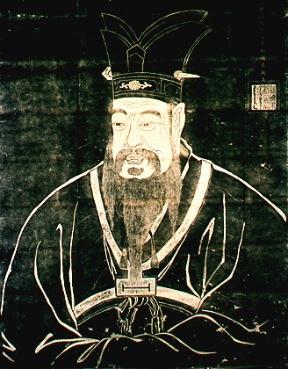
Confucianism, the basis of
the social order in China
since 200 B.C., is an
ethical and philosophical
system focused on morality
and good deeds.
Confucius used internal, not
external force to motivate
proper behavior, feeling the
threat of losing face is more
effective than force. His
system promoted welfare,
fostered education and
promoted right
relationships.
Confucian texts were used
to train scholars for
government office and
became the basis of the
civil service exam.
the social order in China
since 200 B.C., is an
ethical and philosophical
system focused on morality
and good deeds.
Confucius used internal, not
external force to motivate
proper behavior, feeling the
threat of losing face is more
effective than force. His
system promoted welfare,
fostered education and
promoted right
relationships.
Confucian texts were used
to train scholars for
government office and
became the basis of the
civil service exam.