Billie Silvey

CLEOPATRA

When Elizabeth Taylor died in March, it took me back to a
spring night in 1963. I was crying as we hurried out of the
theater in downtown Abilene into the rain and darkness.
Frank opened the big, black umbrella and drew me close as
we walked down a sidewalk that glittered with specks of
mica, looking like diamonds. We were in love. Before the
summer ended, we would be married.
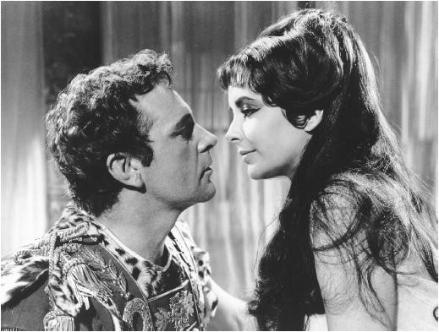
We had been to see Cleopatra—the epic account of an epic
romance starring Taylor and her offscreen lover, Richard
Burton. It was our generation’s Titanic. Their
relationship sparked the screen. The next year, they would
marry.
They were portraying a much older romance, that between
the first-century Egyptian queen Cleopatra VII and the
Roman general Mark Antony. Their story was first told by
the Roman biographer Plutarch and then by Shakespeare in
Antony and Cleopatra.
At the time, Rome was rising to ascendancy over much of the
ancient world, while Egypt--a far older, more mysterious
kingdom--was declining. The Egyptian throne depended on
support from Rome, while Rome depended on Egypt for
grain and minerals. After the assassination of Julius Caesar,
Rome fell into anarchy and civil war.
Three years later, Mark Antony and Octavian shared
leadership, with Octavian ruling the west, including Spain and
Gaul, and Antony taking the east, including Greece and the
Middle East. Needing money to consolidate his power,
Antony looked to the Egyptian queen to supply it. He
summoned her to Tarsus in modern-day Turkey.
spring night in 1963. I was crying as we hurried out of the
theater in downtown Abilene into the rain and darkness.
Frank opened the big, black umbrella and drew me close as
we walked down a sidewalk that glittered with specks of
mica, looking like diamonds. We were in love. Before the
summer ended, we would be married.
We had been to see Cleopatra—the epic account of an epic
romance starring Taylor and her offscreen lover, Richard
Burton. It was our generation’s Titanic. Their
relationship sparked the screen. The next year, they would
marry.
They were portraying a much older romance, that between
the first-century Egyptian queen Cleopatra VII and the
Roman general Mark Antony. Their story was first told by
the Roman biographer Plutarch and then by Shakespeare in
Antony and Cleopatra.
At the time, Rome was rising to ascendancy over much of the
ancient world, while Egypt--a far older, more mysterious
kingdom--was declining. The Egyptian throne depended on
support from Rome, while Rome depended on Egypt for
grain and minerals. After the assassination of Julius Caesar,
Rome fell into anarchy and civil war.
Three years later, Mark Antony and Octavian shared
leadership, with Octavian ruling the west, including Spain and
Gaul, and Antony taking the east, including Greece and the
Middle East. Needing money to consolidate his power,
Antony looked to the Egyptian queen to supply it. He
summoned her to Tarsus in modern-day Turkey.


At first, Cleopatra delayed the journey, but eventually she
appeared, reclining on the deck of a magnicent barge described
by Plutarch as having a "gilded stern and outspread sails of
purple, while oars of silver beat time to the music of flutes and
harps. She herself lay all alone, under a canopy of cloth of gold,
dressed as Venus in a picture, and beautiful young boys, like
painted Cupids, stood on each side to fan her. Her maids were
dressed like Sea Nymphs and Graces, some steering at the
rudder, some working at the ropes. . . .
"Perfumes diffused themselves from the vessel to the shore,
which was covered with multitudes, part following the galley up
the river on either bank, part running out of the city to see the
sight. The market place was quite emptied, and Anthony at last
was left alone sitting upon the tribunal; while the word went
through all the multitude that Venus was come to feast with
Bacchus for the common good of Asia."
appeared, reclining on the deck of a magnicent barge described
by Plutarch as having a "gilded stern and outspread sails of
purple, while oars of silver beat time to the music of flutes and
harps. She herself lay all alone, under a canopy of cloth of gold,
dressed as Venus in a picture, and beautiful young boys, like
painted Cupids, stood on each side to fan her. Her maids were
dressed like Sea Nymphs and Graces, some steering at the
rudder, some working at the ropes. . . .
"Perfumes diffused themselves from the vessel to the shore,
which was covered with multitudes, part following the galley up
the river on either bank, part running out of the city to see the
sight. The market place was quite emptied, and Anthony at last
was left alone sitting upon the tribunal; while the word went
through all the multitude that Venus was come to feast with
Bacchus for the common good of Asia."
Antony was an outstanding general, beloved by his
men, but eleven years later, Octavian declared war
on Antony and his Egyptian allies.
Blockaded in the harbor at Actium, Cleopatra's fleet
escaped. Antony pursued her. After the flight of
their commander, Antony's navy was demoralized.
His large, heavy galleys were no match for the
lighter, more maneuverable Roman ships. Octavian
defeated Antony in the watershed Battle of Actium
in 31 B.C..
Octavian pursued the lovers to Egypt, where he laid
siege to Alexandria. Antony and Cleopatra
committed suicide, and Octavian ruled Rome as the
Emperor Augustus.
men, but eleven years later, Octavian declared war
on Antony and his Egyptian allies.
Blockaded in the harbor at Actium, Cleopatra's fleet
escaped. Antony pursued her. After the flight of
their commander, Antony's navy was demoralized.
His large, heavy galleys were no match for the
lighter, more maneuverable Roman ships. Octavian
defeated Antony in the watershed Battle of Actium
in 31 B.C..
Octavian pursued the lovers to Egypt, where he laid
siege to Alexandria. Antony and Cleopatra
committed suicide, and Octavian ruled Rome as the
Emperor Augustus.
The relationship between Richard Burton and
Elizabeth Taylor, which began in 1961 during the
filming of Cleopatra, received a lot of attention in the
tabloid press as both were married at the time. They
divorced their spouses and married each other in
1964.
Burton grew up as a Presbyterian in a poor
Welsh-speaking household. He had a number of
brothers and sisters. Taylor was the only child in a
well-to-do Catholic family.
As a child, Burton excelled in school productions.
He became one of the great actors of the "British
New Wave" after World War II, appearing in Look
Back in Anger (1959) and The Longest Day
(1962). A libertine, he drank and smoked heavily.
Taylor became a movie star at the age of 12 and
went on to win two Academy Awards.
Their romance was evident in the six other films they
made together, including The V.I.P.s (1963), The
Sandpipers (1965) and The Taming of the Shrew
(1967). By that year, their films had earned $200
million.
The studios were alarmed when they considered
taking a three-month break from film-making,
because nearly half the income of the U.S. film
industry at the time came from movies starring one or
both of them.
Taylor and Burton divorced in 1974, remarried and
divorced again. Burton died in 1984 of a cerebral
hemorrage.
"In my heart, I will always believe we would have
been married a third and final time, " she wrote.
"From those first moments in Rome, we were always
madly and powerfully in love. We had more time . . .
.but not enough."
Frank and I will have been married 48 years in
August.
Elizabeth Taylor, which began in 1961 during the
filming of Cleopatra, received a lot of attention in the
tabloid press as both were married at the time. They
divorced their spouses and married each other in
1964.
Burton grew up as a Presbyterian in a poor
Welsh-speaking household. He had a number of
brothers and sisters. Taylor was the only child in a
well-to-do Catholic family.
As a child, Burton excelled in school productions.
He became one of the great actors of the "British
New Wave" after World War II, appearing in Look
Back in Anger (1959) and The Longest Day
(1962). A libertine, he drank and smoked heavily.
Taylor became a movie star at the age of 12 and
went on to win two Academy Awards.
Their romance was evident in the six other films they
made together, including The V.I.P.s (1963), The
Sandpipers (1965) and The Taming of the Shrew
(1967). By that year, their films had earned $200
million.
The studios were alarmed when they considered
taking a three-month break from film-making,
because nearly half the income of the U.S. film
industry at the time came from movies starring one or
both of them.
Taylor and Burton divorced in 1974, remarried and
divorced again. Burton died in 1984 of a cerebral
hemorrage.
"In my heart, I will always believe we would have
been married a third and final time, " she wrote.
"From those first moments in Rome, we were always
madly and powerfully in love. We had more time . . .
.but not enough."
Frank and I will have been married 48 years in
August.
May 2011