
August 2011
Billie Silvey


The Cotton
Economy
Economy
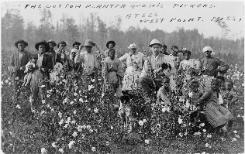
The labor-intensive nature of cotton production
created a sharp two-tier society of planters and
pickers. Note that the planter is the only person
in the photo carrying a gun.
created a sharp two-tier society of planters and
pickers. Note that the planter is the only person
in the photo carrying a gun.
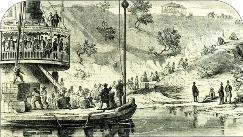
400-pound bales of cotton were carried down to
the river where they were loaded on steamships
for the trip to market.
the river where they were loaded on steamships
for the trip to market.
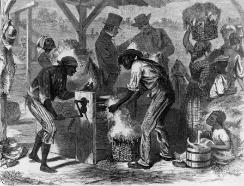
Ironically, the industrialization that eased the
labor of cotton production more firmly
entrenched its dependency on slavery.
labor of cotton production more firmly
entrenched its dependency on slavery.
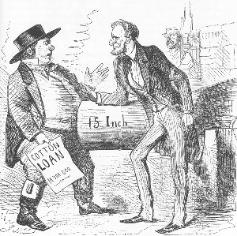
During the civil war, cotton was used as leverage
on both the North and the South, spurring
railroad construction, reducing the immigration of
free labor and limiting the growth of towns and
preserving a pre-industrial society.
.
on both the North and the South, spurring
railroad construction, reducing the immigration of
free labor and limiting the growth of towns and
preserving a pre-industrial society.
.
When the Constitution of the United States was signed
in Philadelphia in 1787, Roger Sherman brokered a
compromise about slavery. He assumed that the evil
of slavery was "dying out ... and would by degrees
disappear." Little did he know that, by the middle of
the next century, “King Cotton� would cause
slavery to become the backbone of the global
economy.
The Industrial Revolution in Great Britain greatly
increased the demand for cotton. Textile mills were
much more productive than individuals producing
goods by hand. Their demands caused cotton
production in America to soar from 156,000 bales in
1800 to more than 4 million in 1860. (A bale is a
compressed bundle of cotton weighing between 400
and 500 pounds.)
But the inventive genius of the Industrial Revolution
was not applied toward developing agricultural
machines to plant and harvest the crop more
efficiently. Cotton was a labor-intensive crop.
Southern planters felt it wasn't economically feasible to
pay agricultural workers to perform that labor, so the
increased demand caused the number of slaves to
increase from 700,000 in 1790 to 4 million in 1860.
In the eyes of the planters, cotton production
depended on slavery and slavery depended on cotton.
By the beginning of the Civil War, cotton provided the
economic underpinnings of the Southern economy,
giving it a huge role in the global economy.
In 1858, Senator James Henry Hammond of South
Carolina wrote:
"Without the firing of a gun, without drawing a sword,
should they [Northerners] make war upon us, we
could bring the whole world to our feet. What would
happen if no cotton was furnished for three years?
England would topple headlong and carry the whole
civilized world with her. No, you dare not make war
on cotton! No power on earth dares make war upon
it. Cotton is king."
The cotton economy of the South was a major
contributor to the expansion of the entire American
economy in the 19th century. It accounted for over
half of all American exports during the first half of the
century. It made it possible for America to borrow
money from abroad. And it fostered trade in
agricultural products from the West and manufactured
goods from the East.
From the time it became a state in 1817 to 1860,
Mississippi became the largest cotton-producing state
in America. During that time, the white population
grew from 5,179 to 353,901, while the slave
population grew from 3,489 to 436,631. By 1860,
the South exported two-thirds of the world supply of
cotton.
But it wasn’t just Southern planters who benefited
from the Cotton Economy. While Mississippi,
Alabama, western Georgia, Louisiana, Arkansas and
Texas provided cheap land suitable for cotton
production, they also attracted thousands of white men
from the North and from the older slave states on the
Atlantic Seaboard who came to make a quick fortune.
In 1850, 25 percent of the population of New Orleans
was from the North and 10 percent of the population
of Mobile, Alabama, was from New York. New York
received some 40 percent of cotton revenues from
supplying insurance, shipping and financing services as
well as selling goods to Southern planters.
Some people, from British factory owners to Southern
planters to Northern businessmen, were doing so well
under the reign of King Cotton that nobody stepped
back to consider the toll being exacted on many other
people, from British mill workers to slaves toiling in
Southern fields. Just because an economy is making
money for some people doesn’t mean it’s
doing well—and certainly not doing good—for all its
people.
in Philadelphia in 1787, Roger Sherman brokered a
compromise about slavery. He assumed that the evil
of slavery was "dying out ... and would by degrees
disappear." Little did he know that, by the middle of
the next century, “King Cotton� would cause
slavery to become the backbone of the global
economy.
The Industrial Revolution in Great Britain greatly
increased the demand for cotton. Textile mills were
much more productive than individuals producing
goods by hand. Their demands caused cotton
production in America to soar from 156,000 bales in
1800 to more than 4 million in 1860. (A bale is a
compressed bundle of cotton weighing between 400
and 500 pounds.)
But the inventive genius of the Industrial Revolution
was not applied toward developing agricultural
machines to plant and harvest the crop more
efficiently. Cotton was a labor-intensive crop.
Southern planters felt it wasn't economically feasible to
pay agricultural workers to perform that labor, so the
increased demand caused the number of slaves to
increase from 700,000 in 1790 to 4 million in 1860.
In the eyes of the planters, cotton production
depended on slavery and slavery depended on cotton.
By the beginning of the Civil War, cotton provided the
economic underpinnings of the Southern economy,
giving it a huge role in the global economy.
In 1858, Senator James Henry Hammond of South
Carolina wrote:
"Without the firing of a gun, without drawing a sword,
should they [Northerners] make war upon us, we
could bring the whole world to our feet. What would
happen if no cotton was furnished for three years?
England would topple headlong and carry the whole
civilized world with her. No, you dare not make war
on cotton! No power on earth dares make war upon
it. Cotton is king."
The cotton economy of the South was a major
contributor to the expansion of the entire American
economy in the 19th century. It accounted for over
half of all American exports during the first half of the
century. It made it possible for America to borrow
money from abroad. And it fostered trade in
agricultural products from the West and manufactured
goods from the East.
From the time it became a state in 1817 to 1860,
Mississippi became the largest cotton-producing state
in America. During that time, the white population
grew from 5,179 to 353,901, while the slave
population grew from 3,489 to 436,631. By 1860,
the South exported two-thirds of the world supply of
cotton.
But it wasn’t just Southern planters who benefited
from the Cotton Economy. While Mississippi,
Alabama, western Georgia, Louisiana, Arkansas and
Texas provided cheap land suitable for cotton
production, they also attracted thousands of white men
from the North and from the older slave states on the
Atlantic Seaboard who came to make a quick fortune.
In 1850, 25 percent of the population of New Orleans
was from the North and 10 percent of the population
of Mobile, Alabama, was from New York. New York
received some 40 percent of cotton revenues from
supplying insurance, shipping and financing services as
well as selling goods to Southern planters.
Some people, from British factory owners to Southern
planters to Northern businessmen, were doing so well
under the reign of King Cotton that nobody stepped
back to consider the toll being exacted on many other
people, from British mill workers to slaves toiling in
Southern fields. Just because an economy is making
money for some people doesn’t mean it’s
doing well—and certainly not doing good—for all its
people.