January 2011
Billie Silvey

Paul Glover, in his website on the future of Los Angeles,
points out that Los Angeles is overwhelmed with traffic.
It is asphyxiated by exhaust fumes.
Its fertile soil is covered with a layer of asphalt.
Its water is carried across hundreds of dry miles in the world’s
longest aqueduct.
Its energy comes through the world’s largest, longest electric
wires.
And its food is trucked in daily for hundreds of miles to the nationâ
€™s largest wholesale market.
Our city should be doomed, but it isn’t.
Los Angeles has a visionary population that refuses to exchange its
view of the ideal for reality.
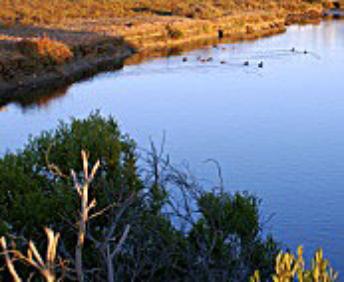
Every so often, when I pass LaBallona Marsh on my way to work,
I see volunteers busily working to pull up the invasive non-native
species and coax back the native flora. As a result, our marsh is
becoming a marsh again, and one day we saw a great blue heron
in the garden of our urban high school.
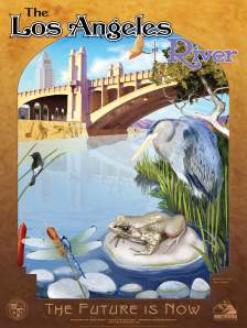
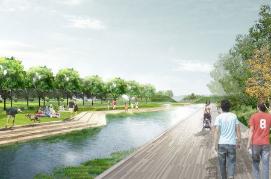
There are visions for the revitalization of the Los Angeles River,
which involve getting rid of its concrete banks, planting grass and
laying out bike paths.
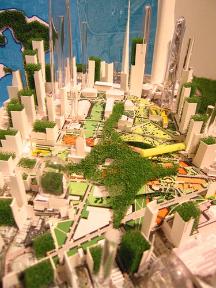
There are also plans for making the city more energy efficient,
planting more trees and setting aside more green space.
Its people, for the most part, have given up gas-guzzlers and are
embracing smaller cars, hybrids and even electric vehicles. Many
regularly ride the express trains, take the bus, or even ride bikes.
We're creating community and backyard gardens.
According to Glover, Los Angeles has four big pluses that are
capable of sustaining it, if we’re willing to take advantage of
them:
1. The soil of this county was the greatest garden in the country,
the top producer of all countries, between 1910 and 1950. It can
be that again if we just dig up the asphalt.
2. The sun shines 290 days a year. A growing season 350 days
long means a continuous harvest, both of renewable food and fuel.
3. We can all work together—all ten million of us from every
country in the world—once we break down the barriers and get
to know each other. It's happening in Neighborhood Councils,
churches and schools all over the county.
4. Water under the desert gives us half the amount used
nationwide, and the ocean has an inexhaustible supply, if we learn
to desalinate efficiently.
There's always hope, if we plan and coordinate and give up some
of our desires for the mutual good.
And, Glover points out, we have to follow four simple guidelines:
1. Use natural resources at the rate they naturally renew.
2. Produce food and fuel at household, neighborhood, municipal
and regional levels.
3. All share equitably in productive work.
4. All share equally in creative culture.
points out that Los Angeles is overwhelmed with traffic.
It is asphyxiated by exhaust fumes.
Its fertile soil is covered with a layer of asphalt.
Its water is carried across hundreds of dry miles in the world’s
longest aqueduct.
Its energy comes through the world’s largest, longest electric
wires.
And its food is trucked in daily for hundreds of miles to the nationâ
€™s largest wholesale market.
Our city should be doomed, but it isn’t.
Los Angeles has a visionary population that refuses to exchange its
view of the ideal for reality.
Every so often, when I pass LaBallona Marsh on my way to work,
I see volunteers busily working to pull up the invasive non-native
species and coax back the native flora. As a result, our marsh is
becoming a marsh again, and one day we saw a great blue heron
in the garden of our urban high school.
There are visions for the revitalization of the Los Angeles River,
which involve getting rid of its concrete banks, planting grass and
laying out bike paths.
There are also plans for making the city more energy efficient,
planting more trees and setting aside more green space.
Its people, for the most part, have given up gas-guzzlers and are
embracing smaller cars, hybrids and even electric vehicles. Many
regularly ride the express trains, take the bus, or even ride bikes.
We're creating community and backyard gardens.
According to Glover, Los Angeles has four big pluses that are
capable of sustaining it, if we’re willing to take advantage of
them:
1. The soil of this county was the greatest garden in the country,
the top producer of all countries, between 1910 and 1950. It can
be that again if we just dig up the asphalt.
2. The sun shines 290 days a year. A growing season 350 days
long means a continuous harvest, both of renewable food and fuel.
3. We can all work together—all ten million of us from every
country in the world—once we break down the barriers and get
to know each other. It's happening in Neighborhood Councils,
churches and schools all over the county.
4. Water under the desert gives us half the amount used
nationwide, and the ocean has an inexhaustible supply, if we learn
to desalinate efficiently.
There's always hope, if we plan and coordinate and give up some
of our desires for the mutual good.
And, Glover points out, we have to follow four simple guidelines:
1. Use natural resources at the rate they naturally renew.
2. Produce food and fuel at household, neighborhood, municipal
and regional levels.
3. All share equitably in productive work.
4. All share equally in creative culture.
L.A. May Not
Be Doomed*
Be Doomed*