
January 2012
Billie Silvey

Learning from
Disasters
Disasters
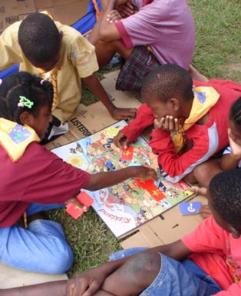

Children (right) learn disaster preparedness
by playing the game, "Riskland."
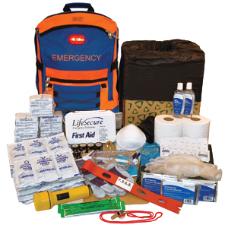
Maintaining an emergency kit (left) can help
your family be aware and prepared. People
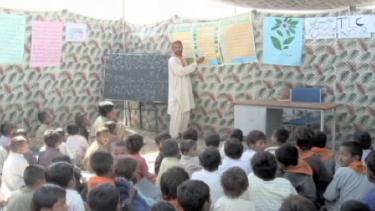
around the world (below) have met to
exchange ideas on emergency preparedness.
by playing the game, "Riskland."
Maintaining an emergency kit (left) can help
your family be aware and prepared. People
around the world (below) have met to
exchange ideas on emergency preparedness.
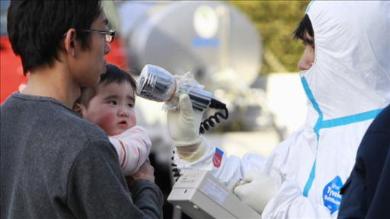
Japan (above) has taken the lead with its
technology and experience with multiple
disaster, but isolated villages (below) find
ways to instruct their citizens in emergency
peparedness.
technology and experience with multiple
disaster, but isolated villages (below) find
ways to instruct their citizens in emergency
peparedness.
The exceptional number of disasters this past year have caused a
new phrase to be added to the language: compassion fatigue. An
article in the New York Times calls it "Becoming Compassionately
Numb," and it describes the fact that there are limits to our physical
and emotional resources.
Frank and I discovered what it meant in a very real way. When we
planned our giving last year, we included a contribution to Haiti
through an international relief agency. They were to make a monthly
withdrawal from our bank account.
Then, when the earthquake struck Japan, we called to make a
separate, larger gift to Japan. Whether through a misunderstanding
or malfeasance, they began to withdraw the larger amount each
month. It took a long time to straighten out.
It was one lesson we learned from the disasters, and here are six
more:
1. We are not in control. God, who made the world, controls
what happens to it and to us. He never intended the world to be
permanent. Someday it is going to end.
The Apostle Matthew writes in his Gospel, "Nation will rise against
nation, and kingdom against kingdom. There will be famines and
earthquakes in various places. All these are the beginning of birth
pains. . . . Because of the increase of wickedness, the love of most
will grow cold, but he who stands firm to the end will be saved"
(Matthew 24:7-8, 12-13).
2. We should do what we can to prepare for disasters. That
being said, so long as the earth remains, we should value it and do
what we can to take care of it, ourselves and each other. We
should prepare for disasters by being aware and having a plan, by
maintaining an emergency preparedness kit and by building physical
and social structures that can withstand the obvious risks.
3. We should work together. We should cooperate with other
communities, cities, states and nations to benefit from our shared
experience. Because of its singular experiences, Japan is well
situated to help us all prepare for earthquakes, floods and nuclear
disasters.
4. We should give as we're able while realizing that nobody
can do it all. We shouldn't let the magnitude of the task overwhelm
us. Our efforts, combined with those of people from various places
and with varied abilities, can make a difference.
5. We should encourage the people we know who are coping
with disaster. There are many forms of disaster--weather,
personal, family, financial, health. And there are many ways to
encourage others. Sometimes we can contribute funds, but other
times we can use words, touch and service to help those impacted
by them.
6. We should pray for those impacted by disaster, trusting
that God will provide our needs and theirs. We should ask
God's guidance in caring for his world and trust our lives to his care.
new phrase to be added to the language: compassion fatigue. An
article in the New York Times calls it "Becoming Compassionately
Numb," and it describes the fact that there are limits to our physical
and emotional resources.
Frank and I discovered what it meant in a very real way. When we
planned our giving last year, we included a contribution to Haiti
through an international relief agency. They were to make a monthly
withdrawal from our bank account.
Then, when the earthquake struck Japan, we called to make a
separate, larger gift to Japan. Whether through a misunderstanding
or malfeasance, they began to withdraw the larger amount each
month. It took a long time to straighten out.
It was one lesson we learned from the disasters, and here are six
more:
1. We are not in control. God, who made the world, controls
what happens to it and to us. He never intended the world to be
permanent. Someday it is going to end.
The Apostle Matthew writes in his Gospel, "Nation will rise against
nation, and kingdom against kingdom. There will be famines and
earthquakes in various places. All these are the beginning of birth
pains. . . . Because of the increase of wickedness, the love of most
will grow cold, but he who stands firm to the end will be saved"
(Matthew 24:7-8, 12-13).
2. We should do what we can to prepare for disasters. That
being said, so long as the earth remains, we should value it and do
what we can to take care of it, ourselves and each other. We
should prepare for disasters by being aware and having a plan, by
maintaining an emergency preparedness kit and by building physical
and social structures that can withstand the obvious risks.
3. We should work together. We should cooperate with other
communities, cities, states and nations to benefit from our shared
experience. Because of its singular experiences, Japan is well
situated to help us all prepare for earthquakes, floods and nuclear
disasters.
4. We should give as we're able while realizing that nobody
can do it all. We shouldn't let the magnitude of the task overwhelm
us. Our efforts, combined with those of people from various places
and with varied abilities, can make a difference.
5. We should encourage the people we know who are coping
with disaster. There are many forms of disaster--weather,
personal, family, financial, health. And there are many ways to
encourage others. Sometimes we can contribute funds, but other
times we can use words, touch and service to help those impacted
by them.
6. We should pray for those impacted by disaster, trusting
that God will provide our needs and theirs. We should ask
God's guidance in caring for his world and trust our lives to his care.