
August 2009
Billie Silvey

The Poetry
Of Sailing
Of Sailing

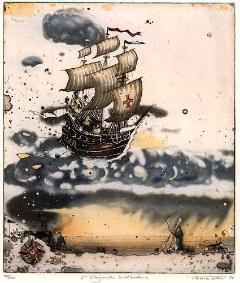
The legend of The Flying Dutchman
is the tale of a Dutch vessel which sank
off the Cape of Good Hope at the tip
of Africa in 1641. The captain didnâ
€™t want to die, so he screamed, â
€œI will round this cape if I have to
keep sailing ‘til Doomsday.�
Numerous people, including a German
submarine crew in World War II, a
future monarch of England, and various
holiday makers claim to have seen the
ghostly ship.
is the tale of a Dutch vessel which sank
off the Cape of Good Hope at the tip
of Africa in 1641. The captain didnâ
€™t want to die, so he screamed, â
€œI will round this cape if I have to
keep sailing ‘til Doomsday.�
Numerous people, including a German
submarine crew in World War II, a
future monarch of England, and various
holiday makers claim to have seen the
ghostly ship.

Most of us first
encountered the poetic
language of sailing as
children, in the nursery
rhyme about "Wynken,
Blynken and Nod,"
who sailed off to sleep
in a wooden shoe.
The poem was
published in 1889 by
Denver journalist
Eugene Field. The first
few lines and an
illustration were
engraved on a silver
cup given to my
mother when I was
born.
encountered the poetic
language of sailing as
children, in the nursery
rhyme about "Wynken,
Blynken and Nod,"
who sailed off to sleep
in a wooden shoe.
The poem was
published in 1889 by
Denver journalist
Eugene Field. The first
few lines and an
illustration were
engraved on a silver
cup given to my
mother when I was
born.
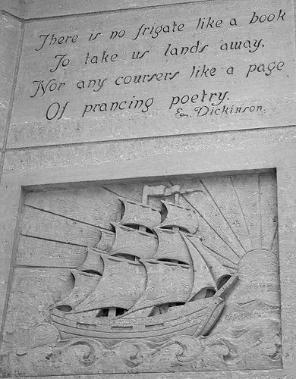
You were probably in
school, as I was, when
you first read Emily
Dickinson’s poem that
begins, “There is no
frigate like a book.� A
favorite of librarians, it
wasn’t published until
1924, 38 years after her
death. The reclusive
Dickinson was a prolific
writer, though fewer than a
dozen of her nearly 1,800
poems were published in
her lifetime. Their short
lines and unconventional
capitalization and
punctuation were far from
the contemporary
definition of poetry, though
now she is recognized as
an American master.
school, as I was, when
you first read Emily
Dickinson’s poem that
begins, “There is no
frigate like a book.� A
favorite of librarians, it
wasn’t published until
1924, 38 years after her
death. The reclusive
Dickinson was a prolific
writer, though fewer than a
dozen of her nearly 1,800
poems were published in
her lifetime. Their short
lines and unconventional
capitalization and
punctuation were far from
the contemporary
definition of poetry, though
now she is recognized as
an American master.
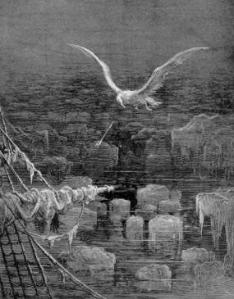
Samuel Taylor Coleridge’s
longest poem, The Rime of the
Ancient Mariner, was published
in 1798 in Lyrical Ballads. It is
the story of a sailor who returns
from a long sea voyage where his
ship has been blown off course to
the shores of Antarctica by a
storm, rescued by an albatross,
then becalmed in the tropics. The
mariner, forced to watch his
shipmates die, is blamed for their
fate and forced to wander the
earth telling the tale.
longest poem, The Rime of the
Ancient Mariner, was published
in 1798 in Lyrical Ballads. It is
the story of a sailor who returns
from a long sea voyage where his
ship has been blown off course to
the shores of Antarctica by a
storm, rescued by an albatross,
then becalmed in the tropics. The
mariner, forced to watch his
shipmates die, is blamed for their
fate and forced to wander the
earth telling the tale.
We generally have to grow older before we appreciate the words of
Alfred Lord Tennyson's "Crossing the Bar." It was published just
three years before the death of the famous Victorian in his 1889
collection Demeter and Other Poems.
Alfred Lord Tennyson's "Crossing the Bar." It was published just
three years before the death of the famous Victorian in his 1889
collection Demeter and Other Poems.