
Billie Silvey

An eclectic website about Women, Christianity,
History, Culture and the Arts--
and anything else that comes to mind.
History, Culture and the Arts--
and anything else that comes to mind.
February 2013
Russia
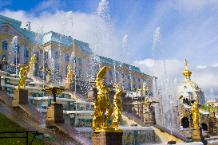
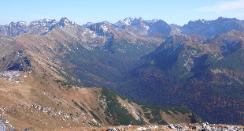
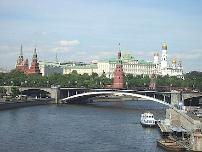
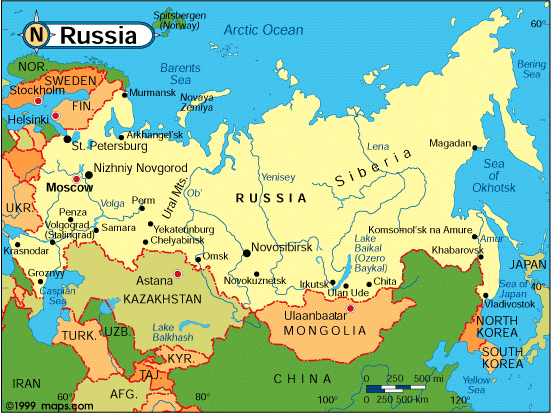
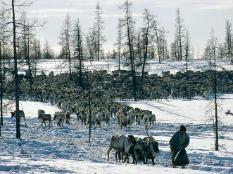
Map of Russia (clockwise from upper left) St.
Petersburg Summer Palace, reindeer herd in
Siberia, Ural Mountains and the capital, Moscow.
Petersburg Summer Palace, reindeer herd in
Siberia, Ural Mountains and the capital, Moscow.
For most of my life, there have been three kinds of
countries--first-, second- and third-world. First-world
countries were mostly in the northern hemisphere of the
West, and their people had plenty to eat (even too much!),
running water, electricity and electronic technology in their
homes.
Third-world countries were mostly in the southern
hemisphere and lacked some of these things.
Second-world countries were mostly in the East with
Communist governments and less efficient economies.
Recently, there has been a new group of nations--known
as the BRICs--Brazil, Russia, India and China. They are
moving rapidly from second- or third- to first-world status,
and they are the nations to watch.
In September 2008, my website was about China, and in
February 2009, India. I haven't done a website
specifically on Brazil, but October 2011 was on the
Amazon, which covers much of the nation, and the
Olympics are set to be held there. So this month I wanted
to write about Russia.
Then during the presidential campaign, Mitt Romney,
when asked about our country's greatest enemy, said
Russia. It felt like he was stuck in a time warp--back in
the 1950s, and I felt that it was important to write about
Russia, to explore this nation that prompted such differing
attitudes.
The sheer size of the country, the beauty of its topography
and the diversity of its population were impressive. I
wanted to write about it because it sounded interesting.
Russia is the largest country in the world. It covers 6.6
million square miles from Europe to the Pacific Ocean and
from the Arctic Circle to hot deserts in the south.
Siberia in the northeast includes frozen tundra, lakes and
forests. The Ural Mountains in the west divide Siberia
from Europe. In the south, the Caucasus Mountains
stretch from the Black to the Caspian Seas.
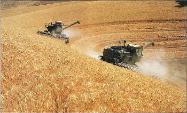
Most of the population lives in the cities and farm lands of
the East European Plain.
Russia was a part of the Union of Soviet Socialist
Republics (USSR) from 1922-91, together with now
independent Estonia, Latvia and Lithuania on the west and
Kazakhstan, Uzbekistan, Turkmenistan and Kyrgyzstan on
the south.
Other articles in the website include those on Russian
history and Russian culture as well as an article about
Arkady Renko, hero of Martin Cruz Smith's Russian
detective series, which includes Gorky Park, Polar Star
Red Square and others.
To contribute your thoughts about any of these topics, I
hope you'll write me at b.silvey@sbcglobal.net.
countries--first-, second- and third-world. First-world
countries were mostly in the northern hemisphere of the
West, and their people had plenty to eat (even too much!),
running water, electricity and electronic technology in their
homes.
Third-world countries were mostly in the southern
hemisphere and lacked some of these things.
Second-world countries were mostly in the East with
Communist governments and less efficient economies.
Recently, there has been a new group of nations--known
as the BRICs--Brazil, Russia, India and China. They are
moving rapidly from second- or third- to first-world status,
and they are the nations to watch.
In September 2008, my website was about China, and in
February 2009, India. I haven't done a website
specifically on Brazil, but October 2011 was on the
Amazon, which covers much of the nation, and the
Olympics are set to be held there. So this month I wanted
to write about Russia.
Then during the presidential campaign, Mitt Romney,
when asked about our country's greatest enemy, said
Russia. It felt like he was stuck in a time warp--back in
the 1950s, and I felt that it was important to write about
Russia, to explore this nation that prompted such differing
attitudes.
The sheer size of the country, the beauty of its topography
and the diversity of its population were impressive. I
wanted to write about it because it sounded interesting.
Russia is the largest country in the world. It covers 6.6
million square miles from Europe to the Pacific Ocean and
from the Arctic Circle to hot deserts in the south.
Siberia in the northeast includes frozen tundra, lakes and
forests. The Ural Mountains in the west divide Siberia
from Europe. In the south, the Caucasus Mountains
stretch from the Black to the Caspian Seas.
Most of the population lives in the cities and farm lands of
the East European Plain.
Russia was a part of the Union of Soviet Socialist
Republics (USSR) from 1922-91, together with now
independent Estonia, Latvia and Lithuania on the west and
Kazakhstan, Uzbekistan, Turkmenistan and Kyrgyzstan on
the south.
Other articles in the website include those on Russian
history and Russian culture as well as an article about
Arkady Renko, hero of Martin Cruz Smith's Russian
detective series, which includes Gorky Park, Polar Star
Red Square and others.
To contribute your thoughts about any of these topics, I
hope you'll write me at b.silvey@sbcglobal.net.
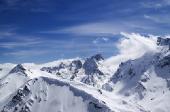
| Caucasus Mountains |
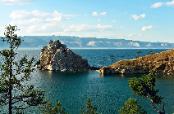
| Lake Baikal |
| Wheat Field on Northern European Plain |