Billie Silvey
October 2006
The following are my favorite movies among those that
came out in the various decades of my life. Most of them
make you think as well as feel. They cause you to wonder
what you would do in similar circumstances and inspire you
to want to do better.
came out in the various decades of my life. Most of them
make you think as well as feel. They cause you to wonder
what you would do in similar circumstances and inspire you
to want to do better.
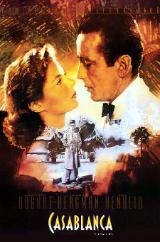
The 40s. Casablanca, the
quintessential movie of the 1940s,
has everything--megastars
Humphrey Bogart and Ingrid
Bergman, a tragic romance, an
exotic setting, danger, humor and
intrigue.
The woman with the guitar singing
the Marseillaise and being joined
by other patrons of Rick’s
Cafe until they drown out the
Nazis still brings me to tears, as
does the ending when Rick, in
typical Bogart reversion to type,
sacrifices his love for the good of
others.
quintessential movie of the 1940s,
has everything--megastars
Humphrey Bogart and Ingrid
Bergman, a tragic romance, an
exotic setting, danger, humor and
intrigue.
The woman with the guitar singing
the Marseillaise and being joined
by other patrons of Rick’s
Cafe until they drown out the
Nazis still brings me to tears, as
does the ending when Rick, in
typical Bogart reversion to type,
sacrifices his love for the good of
others.
The 50s. The 50s marked the
beginning of the youth culture, and the
prime example of its depiction was
Rebel Without a Cause. This classic
introduced heartthrob James Dean,
who could look up under his eyebrows
and make all us girls melt. But a movie
in which young people defied their
parents, and even the law, for what
they believed was right made a whole
generation rethink social norms.
beginning of the youth culture, and the
prime example of its depiction was
Rebel Without a Cause. This classic
introduced heartthrob James Dean,
who could look up under his eyebrows
and make all us girls melt. But a movie
in which young people defied their
parents, and even the law, for what
they believed was right made a whole
generation rethink social norms.
The 60s. In the 60s, we continued to
rebel, but now we had causes--racial
equality, world peace, and individual
freedom. It was a decade of idealism,
and even the sleazy characters of
Midnight Cowboy developed a sort of
nobility, as Jon Voight’s male
prostitute Joe Buck makes Christlike
sacrifices for his friend, Ratso Rizzo,
played by Dustin Hoffman. Some will
disapprove of the film’s graphic
sex and language, but I was deeply
moved.
rebel, but now we had causes--racial
equality, world peace, and individual
freedom. It was a decade of idealism,
and even the sleazy characters of
Midnight Cowboy developed a sort of
nobility, as Jon Voight’s male
prostitute Joe Buck makes Christlike
sacrifices for his friend, Ratso Rizzo,
played by Dustin Hoffman. Some will
disapprove of the film’s graphic
sex and language, but I was deeply
moved.
The 70s. Chinatown was the best Los
Angeles movie in my estimation for
many decades. It featured a stellar cast,
with Jack Nicholson in what I consider
his best role ever and John Huston as a
villain who can still give me chills.
There’s a clash of cultures and
fascinating background on the event that
made possible the Los Angeles we
know today--bringing water to the San
Fernando Valley. The movie also
stimulated my awareness of the
exploitation of women, a key aspect of
the Women’s Movement of the time.
Angeles movie in my estimation for
many decades. It featured a stellar cast,
with Jack Nicholson in what I consider
his best role ever and John Huston as a
villain who can still give me chills.
There’s a clash of cultures and
fascinating background on the event that
made possible the Los Angeles we
know today--bringing water to the San
Fernando Valley. The movie also
stimulated my awareness of the
exploitation of women, a key aspect of
the Women’s Movement of the time.
The 80s. Ben Kingsley became the
champion of nonviolent freedom in
Gandhi, a spectacle featuring a real-
life hero with a heart and a brain. He
portrayed a Christ-figure who admired
Jesus’ teachings but ultimately
rejected Christianity because Christians
did such a poor job of living them out.
It made me question my view of
cultures around the world and my knee-
jerk sense of superiority.
champion of nonviolent freedom in
Gandhi, a spectacle featuring a real-
life hero with a heart and a brain. He
portrayed a Christ-figure who admired
Jesus’ teachings but ultimately
rejected Christianity because Christians
did such a poor job of living them out.
It made me question my view of
cultures around the world and my knee-
jerk sense of superiority.
The 90s. The 90s for me was the most
difficult decade to choose a favorite
movie, and not because there were so
many great ones to select from. I
finally settled on Schindler’s List
as a good, though flawed, depiction of
the Holocaust. It brought us the 90s
idealistic hero, played by Liam
Neeson, with Ralph Fiennes as a Nazi
villain to make your skin crawl, and
another Ben Kingsley role that
demonstrates the difference between
American actors who play themselves
and British actors who become other
people.
And who can forget that flash of red
coat?
difficult decade to choose a favorite
movie, and not because there were so
many great ones to select from. I
finally settled on Schindler’s List
as a good, though flawed, depiction of
the Holocaust. It brought us the 90s
idealistic hero, played by Liam
Neeson, with Ralph Fiennes as a Nazi
villain to make your skin crawl, and
another Ben Kingsley role that
demonstrates the difference between
American actors who play themselves
and British actors who become other
people.
And who can forget that flash of red
coat?
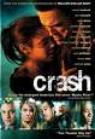
The 00s. Crash to me is the best
portrayal of the people in Los Angeles,
who are able to live lives that never
touch until they crash into each other.
Dealing with our car culture, alienation
and segregation by race and class, the
ensemble cast vividly illustrates the fact
that we have a lot more that unites us
than divides, if we could just get out of
our isolation long enough to recognize
it. The language is incredibly strong,
reflecting the worst sides of human
nature, while the film presents the hope
that our best sides will win out.
portrayal of the people in Los Angeles,
who are able to live lives that never
touch until they crash into each other.
Dealing with our car culture, alienation
and segregation by race and class, the
ensemble cast vividly illustrates the fact
that we have a lot more that unites us
than divides, if we could just get out of
our isolation long enough to recognize
it. The language is incredibly strong,
reflecting the worst sides of human
nature, while the film presents the hope
that our best sides will win out.

| Movies through the Decades |