
Billie Silvey

June 2011
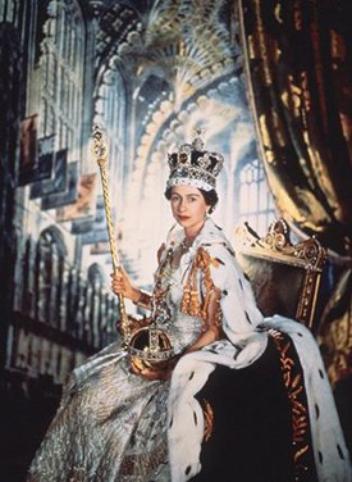
The Coronation of
Elizabeth
Elizabeth
On June 2, 1953, Princess Elizabeth was
crowned queen of England. I was 11 at the time,
ready to start 5th grade. As far as I know, only
one person from my small hometown of Happy,
Texas, attended the coronation. When she got
back, she invited me to her house to see her
treasure trove of souvenirs— clippings, pictures
and pamphlets. They were all at my disposal so
long as I organized them into a report for my
class in school that fall.
I could even cut out pictures to illustrate the
report. In those pre-Internet days, it was the
only way to illustrate something.
I don’t know why she chose me. Maybe it
was because I was one of just a few girls in my
class who lived in town and could walk over and
pick things up. Maybe it was because I was tiny
and a bit shy and she wanted to encourage me.
Maybe it was because my father owned the
newspaper, and most of the people in town knew
I sometimes wrote articles for it.
I remember reading through the veritable mound
of coronation souvenirs, trying to choose the
important details, looking over the photos to
select just the right ones.
I remember the jeweled crown and the fine
fabrics, but mostly I remember how tiny the new
queen looked and how heavy the crown looked
on her head. Being a small child myself, and
often overwhelmed by my own responsibilities, I
sympathized.
I’ve continued to sympathize over the years
as British public opinion shifted from favor to
disfavor with the various changes in the queenâ
€™s life and the lives of her family.
It happens with our presidents—their
acceptance rate rises and falls. But unlike a
president, a queen never has an election. She
swears an oath to her people, and they swear an
oath to her. It’s a little like marriage that way.
Princess Elizabeth Alexandra Mary was born
April 21, 1926. Her parents were the future
King George VI and Queen Elizabeth, later
known as the Queen Mother. She was educated
at home by her mother, a governess, and private
tutors.
During World War II, it was suggested that she
and her sister be moved to Canada for their
safety. Their mother refused to send the girls
away alone, and she knew her husband wouldnâ
€™t leave. The royal family remained in England
through the Blitz.
In 1940, Elizabeth made her first radio broadcast
during the BBC Children’s Hour. Speaking
to children who had been evacuated, she assured
them that all would be well.
In 1945, at the age of 19, she joined the Womenâ
€™s Auxiliary Territorial Service and trained as a
driver and mechanic. She is the last surviving
head of state to serve in uniform during World
War II.
She met her future husband, Prince Philip, when
she was 8 and again when she was 13. They
exchanged letters for a number of years until they
married in 1947. They had three sons and a
daughter.
When her father’s health declined, Elizabeth
stood in for him at public events. He died in
1952 while Elizabeth and Philip were touring
Australia and New Zealand.
Elizabeth succeeded her father in a televised
coronation ceremony in Westminster Abbey that
was viewed by millions. When she became
queen, Britain had a number of dominions and
dependencies, but during the 50s and 60s, many
achieved independence. The British Empire
evolved into the Commonwealth of Nations.
The 70s and 80s were marked by worldwide
travels, including a trip to the U.S. for the 400th
anniversary celebration of the founding of
Jamestown.
The 90s were a decade of problems for the royal
family, including questions of succession, a fire at
Windsor Castle, two very public divorces and
her daughter-in-law Diana’s death in a car
crash.
Elizabeth’s Golden Jubilee, marking 50 years
as queen, was held in 2002, not long after the
death of her mother and sister. There was a
three-day celebration in London. She was the
first monarch to attain the milestone since Queen
Victoria.
She celebrated her 80th birthday in 2006, and
the next year, she and Prince Philip marked their
60th wedding anniversary, the longest marriage of
any British monarch. Preparations currently are
being made for her Diamond Jubilee in 2012.
crowned queen of England. I was 11 at the time,
ready to start 5th grade. As far as I know, only
one person from my small hometown of Happy,
Texas, attended the coronation. When she got
back, she invited me to her house to see her
treasure trove of souvenirs— clippings, pictures
and pamphlets. They were all at my disposal so
long as I organized them into a report for my
class in school that fall.
I could even cut out pictures to illustrate the
report. In those pre-Internet days, it was the
only way to illustrate something.
I don’t know why she chose me. Maybe it
was because I was one of just a few girls in my
class who lived in town and could walk over and
pick things up. Maybe it was because I was tiny
and a bit shy and she wanted to encourage me.
Maybe it was because my father owned the
newspaper, and most of the people in town knew
I sometimes wrote articles for it.
I remember reading through the veritable mound
of coronation souvenirs, trying to choose the
important details, looking over the photos to
select just the right ones.
I remember the jeweled crown and the fine
fabrics, but mostly I remember how tiny the new
queen looked and how heavy the crown looked
on her head. Being a small child myself, and
often overwhelmed by my own responsibilities, I
sympathized.
I’ve continued to sympathize over the years
as British public opinion shifted from favor to
disfavor with the various changes in the queenâ
€™s life and the lives of her family.
It happens with our presidents—their
acceptance rate rises and falls. But unlike a
president, a queen never has an election. She
swears an oath to her people, and they swear an
oath to her. It’s a little like marriage that way.
Princess Elizabeth Alexandra Mary was born
April 21, 1926. Her parents were the future
King George VI and Queen Elizabeth, later
known as the Queen Mother. She was educated
at home by her mother, a governess, and private
tutors.
During World War II, it was suggested that she
and her sister be moved to Canada for their
safety. Their mother refused to send the girls
away alone, and she knew her husband wouldnâ
€™t leave. The royal family remained in England
through the Blitz.
In 1940, Elizabeth made her first radio broadcast
during the BBC Children’s Hour. Speaking
to children who had been evacuated, she assured
them that all would be well.
In 1945, at the age of 19, she joined the Womenâ
€™s Auxiliary Territorial Service and trained as a
driver and mechanic. She is the last surviving
head of state to serve in uniform during World
War II.
She met her future husband, Prince Philip, when
she was 8 and again when she was 13. They
exchanged letters for a number of years until they
married in 1947. They had three sons and a
daughter.
When her father’s health declined, Elizabeth
stood in for him at public events. He died in
1952 while Elizabeth and Philip were touring
Australia and New Zealand.
Elizabeth succeeded her father in a televised
coronation ceremony in Westminster Abbey that
was viewed by millions. When she became
queen, Britain had a number of dominions and
dependencies, but during the 50s and 60s, many
achieved independence. The British Empire
evolved into the Commonwealth of Nations.
The 70s and 80s were marked by worldwide
travels, including a trip to the U.S. for the 400th
anniversary celebration of the founding of
Jamestown.
The 90s were a decade of problems for the royal
family, including questions of succession, a fire at
Windsor Castle, two very public divorces and
her daughter-in-law Diana’s death in a car
crash.
Elizabeth’s Golden Jubilee, marking 50 years
as queen, was held in 2002, not long after the
death of her mother and sister. There was a
three-day celebration in London. She was the
first monarch to attain the milestone since Queen
Victoria.
She celebrated her 80th birthday in 2006, and
the next year, she and Prince Philip marked their
60th wedding anniversary, the longest marriage of
any British monarch. Preparations currently are
being made for her Diamond Jubilee in 2012.


Elizabeth with her parents,
grandmother and younger sister
Margaret (above).
The royal couple touring London
after the Blitz (below).
grandmother and younger sister
Margaret (above).
The royal couple touring London
after the Blitz (below).