
June 2010
Billie Silvey

Fashionable
Living
Living
Gilding is a thin layer of gold leaf laid over the surface of an object. What we call
fashion or lifestyle is just as thin. It's not what you wear but what you are that matters.
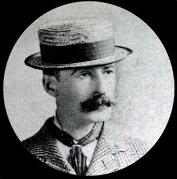
On the eastern seaboard during the Gilded Age, Winslow Homer (wearing the
popular boater hat above) painted the distinctive light that bathed the ocean scenes
and scenes of people going about their daily lives.
fashion or lifestyle is just as thin. It's not what you wear but what you are that matters.
On the eastern seaboard during the Gilded Age, Winslow Homer (wearing the
popular boater hat above) painted the distinctive light that bathed the ocean scenes
and scenes of people going about their daily lives.
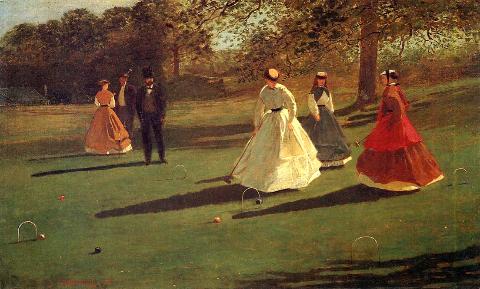
Shown is one of his five paintings of croquet, a popular pastime that had begun in
England and then swept the U.S. It is an early indication of the leisure of an upper
class supported by the labor of the masses.
It was also one of the first ways upper class women could get outdoor exercise and
compete with men on a level playing field. The women in the scene are wearing the
hoop skirts typical of the late 1800s, or the Victorian period.
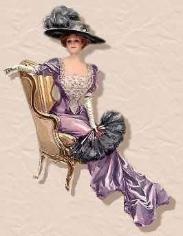
The woman below left is dressed in the fashion of the first decade of the 20th century,
or the Edwardian period, with its very different style. The Gilded Age, also known as
the Belle Epoque or Fin de siecle, noted for its opulence and decadence,
overshadowed by dread, spanned the two eras. But both featured the popular wasp
waist, achieved by lacing the victim in a corset of whalebone--not healthy for women
or whales!
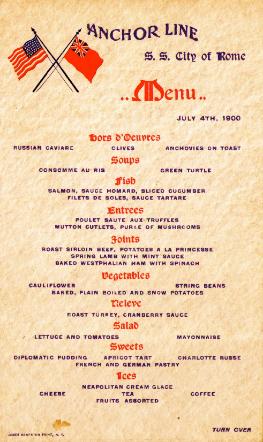
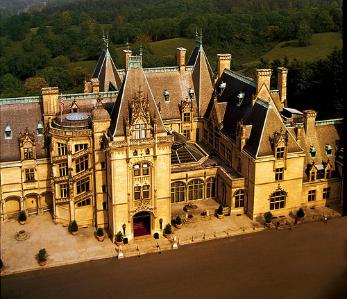
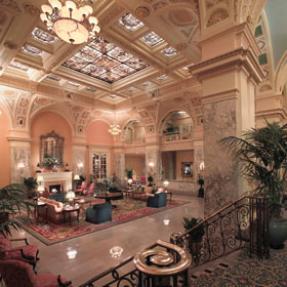
With its big hats decorated with everything from rare ostrich plumes to equally rare
diamonds, Edwardian fashion spoke of the conspicuous consumption of the Gilded
Age. People had money, and they flaunted it, as seen in the illustrations of a cruise line
menu and in a house and a room from the period.
As I researched the Gilded Age for this website, I couldn't help be struck by some of
its parallels with our society today. The skirts are shorter, the sports more strenuous,
but the gap between rich and poor is greater now than at any time since then.
Our pursuit of leisure and fashion is just as great as theirs, and in seeking the trappings
of wealth and comfort, we show the same disregard for those who can't keep up and
for the natural resources of God's world.
God has the same messages for us that he had for them:
"Give me neither poverty nor riches, but give me only my daily bread.
Otherwise, I may have too much and disown you and say, 'Who is the Lord?' Or
I may become poor and steal, and so dishonor the name of my God."
--Proverbs 30:8-9
"Therefore I tell you, do not worry about your life, what you will eat or drink; or
about your body, what you will wear. Is not life more important than food and
the body more important than clothes?'
--Matthew 6:25
"The Lord God took the man and put him in the Garden of Eden to work it and
take care of it."
--Genesis 2:15
"For physical training is of some value, but godliness has value for all things,
holding promise for both the present life and the life to come."
--1 Timothy 4:8
"He who has been stealing must steal no longer, but must work, doing
something useful with his own hands, that he may have something to share with
those in need."
--Ephesians 4:28
"We do not dare to classify or compare ourselves with some who commend
themselves. When they measure themselves by themselves and compare
themselves with themselves, they are not wise. We, however, will not boast
beyond proper limits, but will confine our boasting to the field God has assigned
to us."
--2 Corinthians 10:12-13
"But if we have food and clothing, we will be content with that. People who
want to get rich fall into temptation and a trap and into many foolish and
harmful desires that plunge men into ruin and destruction."
--1 Timothy 6:8-9
England and then swept the U.S. It is an early indication of the leisure of an upper
class supported by the labor of the masses.
It was also one of the first ways upper class women could get outdoor exercise and
compete with men on a level playing field. The women in the scene are wearing the
hoop skirts typical of the late 1800s, or the Victorian period.
The woman below left is dressed in the fashion of the first decade of the 20th century,
or the Edwardian period, with its very different style. The Gilded Age, also known as
the Belle Epoque or Fin de siecle, noted for its opulence and decadence,
overshadowed by dread, spanned the two eras. But both featured the popular wasp
waist, achieved by lacing the victim in a corset of whalebone--not healthy for women
or whales!
With its big hats decorated with everything from rare ostrich plumes to equally rare
diamonds, Edwardian fashion spoke of the conspicuous consumption of the Gilded
Age. People had money, and they flaunted it, as seen in the illustrations of a cruise line
menu and in a house and a room from the period.
As I researched the Gilded Age for this website, I couldn't help be struck by some of
its parallels with our society today. The skirts are shorter, the sports more strenuous,
but the gap between rich and poor is greater now than at any time since then.
Our pursuit of leisure and fashion is just as great as theirs, and in seeking the trappings
of wealth and comfort, we show the same disregard for those who can't keep up and
for the natural resources of God's world.
God has the same messages for us that he had for them:
"Give me neither poverty nor riches, but give me only my daily bread.
Otherwise, I may have too much and disown you and say, 'Who is the Lord?' Or
I may become poor and steal, and so dishonor the name of my God."
--Proverbs 30:8-9
"Therefore I tell you, do not worry about your life, what you will eat or drink; or
about your body, what you will wear. Is not life more important than food and
the body more important than clothes?'
--Matthew 6:25
"The Lord God took the man and put him in the Garden of Eden to work it and
take care of it."
--Genesis 2:15
"For physical training is of some value, but godliness has value for all things,
holding promise for both the present life and the life to come."
--1 Timothy 4:8
"He who has been stealing must steal no longer, but must work, doing
something useful with his own hands, that he may have something to share with
those in need."
--Ephesians 4:28
"We do not dare to classify or compare ourselves with some who commend
themselves. When they measure themselves by themselves and compare
themselves with themselves, they are not wise. We, however, will not boast
beyond proper limits, but will confine our boasting to the field God has assigned
to us."
--2 Corinthians 10:12-13
"But if we have food and clothing, we will be content with that. People who
want to get rich fall into temptation and a trap and into many foolish and
harmful desires that plunge men into ruin and destruction."
--1 Timothy 6:8-9
"So long as all the increased
wealth which modern progress
brings goes but to build up
great fortunes, to increase
luxury and make sharper the
contrast between the House of Have and the House of
Want, progress is not real and cannot be permanent."
--Henry George, Progress and Poverty
wealth which modern progress
brings goes but to build up
great fortunes, to increase
luxury and make sharper the
contrast between the House of Have and the House of
Want, progress is not real and cannot be permanent."
--Henry George, Progress and Poverty