
December 2008
Billie Silvey
Roots
Of Hospitality
Of Hospitality

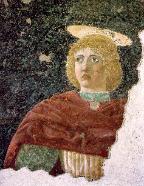
Hospitality, like most things, began at home with people welcoming
guests to share their food, fire and shelter.
In the early church, legends grew up around certain individuals who
became associated with various aspects of hospitality.
guests to share their food, fire and shelter.
In the early church, legends grew up around certain individuals who
became associated with various aspects of hospitality.


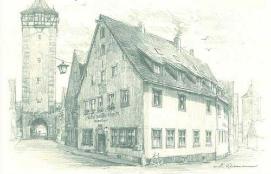
The young Julian, to atone for a crime, built
a refuge and cared for travelers. He
became the patron saint of
tavern-keepers.
a refuge and cared for travelers. He
became the patron saint of
tavern-keepers.
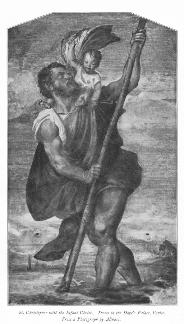
Legend has it that St. Christopher
carried the Christ child across a river
on his shoulders. He became known
as the patron saint of travelers. He
also is said to have thrust his staff into
the ground near his hut, where it
blossomed and bore fruit to provide
food and shade for travelers.
carried the Christ child across a river
on his shoulders. He became known
as the patron saint of travelers. He
also is said to have thrust his staff into
the ground near his hut, where it
blossomed and bore fruit to provide
food and shade for travelers.
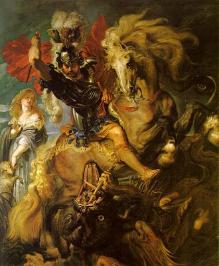
St.George, the British knight said
to have slain a dragon, is also
supposed to make the path
smooth and safe for travelers.
to have slain a dragon, is also
supposed to make the path
smooth and safe for travelers.
In the Middle Ages, the growth of monasteries promoted
hospitality. St. Benedict made hospitality one of the rules of his
order. The Hospice of St. Bernard was known for protecting
travelers in the Alps. And in 1119, the Knights Hospitallers of St.
John was founded to care for German pilgrims and escort them
safely through Palestine during the Crusades.
By the Renaissance, the Hospitallers were keeping guests in Europe
as well as Palestine. Martin Luther stayed with the Knights of St.
John in 1521 while attending the Diet at Worms.
The American Mark Twain wrote in Innocents Abroad of the
Convent Fathers:
A pilgrim without money, whether he be a Protestant or a
Catholic, can travel the length and breadth of Palestine, and in
the midst of her desert wastes, find wholesome food and a clean
bed every night in these buildings.
hospitality. St. Benedict made hospitality one of the rules of his
order. The Hospice of St. Bernard was known for protecting
travelers in the Alps. And in 1119, the Knights Hospitallers of St.
John was founded to care for German pilgrims and escort them
safely through Palestine during the Crusades.
By the Renaissance, the Hospitallers were keeping guests in Europe
as well as Palestine. Martin Luther stayed with the Knights of St.
John in 1521 while attending the Diet at Worms.
The American Mark Twain wrote in Innocents Abroad of the
Convent Fathers:
A pilgrim without money, whether he be a Protestant or a
Catholic, can travel the length and breadth of Palestine, and in
the midst of her desert wastes, find wholesome food and a clean
bed every night in these buildings.
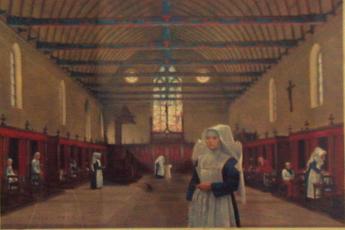
The efforts of individuals in their homes and monks in their
monasteries grew into three distinct branches of the modern
hospitality industry:
1) Taverns provided food and drink for the traveler; 2) Inns offered
overnight hospitality, and 3) Hospitals cared for the ill and injured,
because monks were the only physicians in the Middle Ages and
monasteries were open to everyone.
monasteries grew into three distinct branches of the modern
hospitality industry:
1) Taverns provided food and drink for the traveler; 2) Inns offered
overnight hospitality, and 3) Hospitals cared for the ill and injured,
because monks were the only physicians in the Middle Ages and
monasteries were open to everyone.
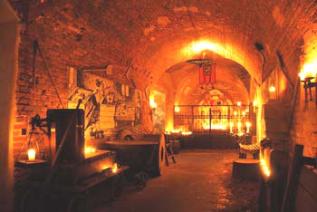
Our busy lives, smaller houses and lack of servants may make it
more difficult to practice hospitality today, but it may be that open
hearts, homes and hearths are needed now more than ever. Let's
make an effort to lay out the welcome mat whenever we can.
more difficult to practice hospitality today, but it may be that open
hearts, homes and hearths are needed now more than ever. Let's
make an effort to lay out the welcome mat whenever we can.
| 1 |
| 2 |
| 3 |

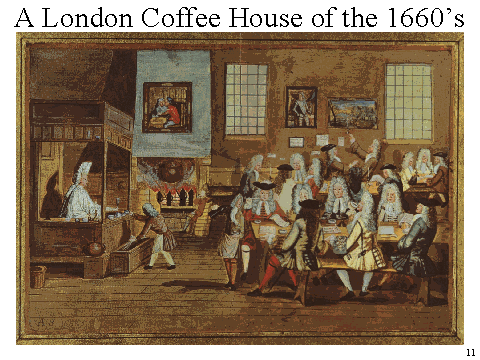
Coffee had been brought to England
by the British and Dutch East Indian
Companies by the 16th century. It
became popular because it was
thought to stimulate creativity without
the bad effects of alcohol. Women
were not allowed in the first
coffeehouse in England, which was
founded in 1650. In 1668, Edward
Lloyd's coffeehouse opened in
London. Popular with merchants and
maritime insurance agents, it became
the most famous insurance company in
the world, Lloyds of London.
by the British and Dutch East Indian
Companies by the 16th century. It
became popular because it was
thought to stimulate creativity without
the bad effects of alcohol. Women
were not allowed in the first
coffeehouse in England, which was
founded in 1650. In 1668, Edward
Lloyd's coffeehouse opened in
London. Popular with merchants and
maritime insurance agents, it became
the most famous insurance company in
the world, Lloyds of London.
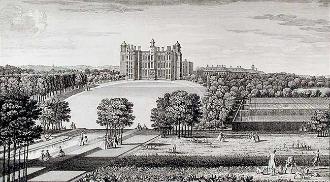
In the 18th and 19th centuries, British nobility entertained in their
lavish country houses, where guests could escape the noise and
pollution of London and take part in sports and social life.
lavish country houses, where guests could escape the noise and
pollution of London and take part in sports and social life.