

September 2007
Billie Silvey
People have always watched
the paths of birds through the
skyways and dreamed of
flying with them.
One of the first to seriously
study fight was that vast
intellect of the Renaissance,
Leonardo da Vinci.
Leonardo studied the
structure of bird wings and
designed both fixed-wing
and vertical take-off
machines to mimic them.
Around 1500, he wrote the
Codex on the Flight of Bird,
with the first scientific
observations on flight. He
made over 100 illustrations
of his theories.
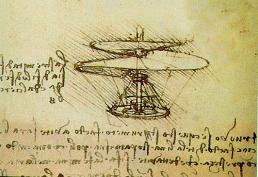
Da Vinci’s Ornithopter
showed that man could fly,
though the flying machine
was never actually created.
the paths of birds through the
skyways and dreamed of
flying with them.
One of the first to seriously
study fight was that vast
intellect of the Renaissance,
Leonardo da Vinci.
Leonardo studied the
structure of bird wings and
designed both fixed-wing
and vertical take-off
machines to mimic them.
Around 1500, he wrote the
Codex on the Flight of Bird,
with the first scientific
observations on flight. He
made over 100 illustrations
of his theories.
Da Vinci’s Ornithopter
showed that man could fly,
though the flying machine
was never actually created.

A History
Of Flight
Of Flight

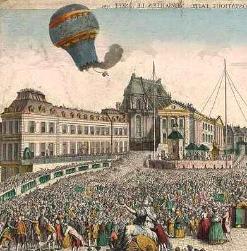
Joseph and Jacques Montgolfier,
brothers, invented the first hot air
balloon, flying passengers in 1783 to
3,000 feet over the city of Lyons,
France.
brothers, invented the first hot air
balloon, flying passengers in 1783 to
3,000 feet over the city of Lyons,
France.
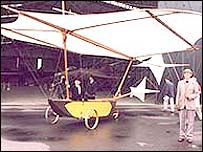
An Englishman, George Cayley
designed gliders in the early 1850s,
with a small boy as his first passenger.
Then in 1853, he had his coachman,
John Appleby, fly it. Cayley is
described by aviation experts as the
father of aeronautics.
designed gliders in the early 1850s,
with a small boy as his first passenger.
Then in 1853, he had his coachman,
John Appleby, fly it. Cayley is
described by aviation experts as the
father of aeronautics.
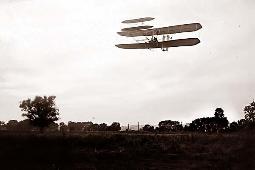
The Wright Brothers tested glider
shapes to learn how they could be
controlled, designing and using a wind
tunnel.
Finally, the Flyer, powered by a 12
horsepower engine, lifted from the
North Carolina Outer Banks on
December 17, 1903. The brothers
took turns during the test flights, and
the first heavier-than-air flight traveled
120 feet in 12 seconds during Orvilleâ
€™s turn to test the plane.
shapes to learn how they could be
controlled, designing and using a wind
tunnel.
Finally, the Flyer, powered by a 12
horsepower engine, lifted from the
North Carolina Outer Banks on
December 17, 1903. The brothers
took turns during the test flights, and
the first heavier-than-air flight traveled
120 feet in 12 seconds during Orvilleâ
€™s turn to test the plane.
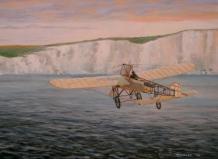
In 1909, Louis Bleriot, a French
inventor, made a 37-minute flight
across the English Channel in an
aircraft he designed himself.
inventor, made a 37-minute flight
across the English Channel in an
aircraft he designed himself.

Charles Lindbergh flew the Spirit
of St. Louis in 1927 in the first
nonstop flight across the Atlantic.
of St. Louis in 1927 in the first
nonstop flight across the Atlantic.

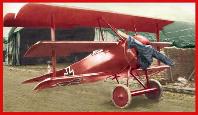
Manfred von Richthofen of the German
Air Force was the most famous ace of
World War I He painted the fuselage
of his Albatros D a bright red, and the
British called him the Red Baron. He
was shot down by a single bullet from
a machine gun from the trenches in
1918.
Air Force was the most famous ace of
World War I He painted the fuselage
of his Albatros D a bright red, and the
British called him the Red Baron. He
was shot down by a single bullet from
a machine gun from the trenches in
1918.
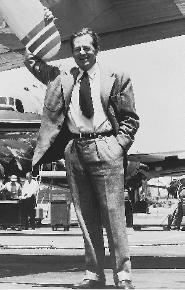
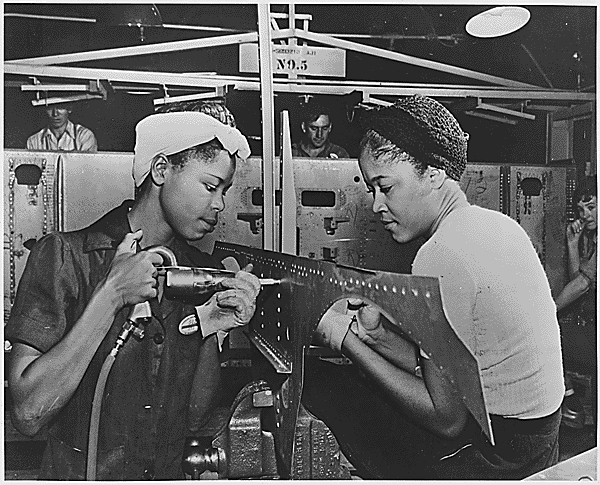
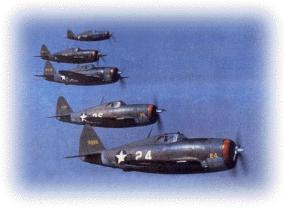
World War II marked the triumph of
aviation in America. The push to
produce fighter planes like the P-47
(above left) led to the rise of major
aircraft companies. Donald Douglas
(above right) was among the owners of
the industry which allowed women and
African Americans to get good-paying
jobs and a piece of the American
dream.
aviation in America. The push to
produce fighter planes like the P-47
(above left) led to the rise of major
aircraft companies. Donald Douglas
(above right) was among the owners of
the industry which allowed women and
African Americans to get good-paying
jobs and a piece of the American
dream.
Amelia Earhart, the most famous
woman pilot, bought her first plane in
1921, using it to set the women's
altitude record of 14,000 feet. In
1928, she made a team flight across
the Atlantic, and the next year,
Congress awarded her the
Distinguished Flying Cross.
woman pilot, bought her first plane in
1921, using it to set the women's
altitude record of 14,000 feet. In
1928, she made a team flight across
the Atlantic, and the next year,
Congress awarded her the
Distinguished Flying Cross.
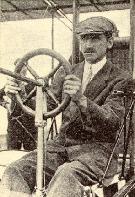
The next year, Glenn Curtiss flew along
the Hudson River from Albany to New
York City, winning a $10,000 prize
offered by pubisher Joseph Pulitzer.
He covered the 137 miles in 153
minutes, averaging nearly 55 mph, then
flew over Manhattan Island and circled
the Statue of Liberty. Curtiss received
the first pilot's license issued in the U. S.
the Hudson River from Albany to New
York City, winning a $10,000 prize
offered by pubisher Joseph Pulitzer.
He covered the 137 miles in 153
minutes, averaging nearly 55 mph, then
flew over Manhattan Island and circled
the Statue of Liberty. Curtiss received
the first pilot's license issued in the U. S.