

July 2008
Billie Silvey
The History of
Screenland
Screenland
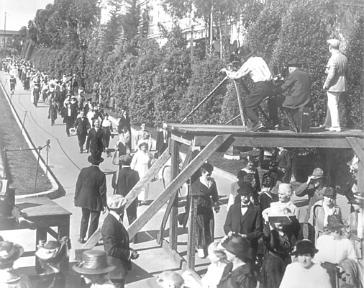
It was 1915 when Harry Culver, the developer of
Culver City, saw Thomas Ince, a famous filmmaker,
shooting a scene from a western near his newly
developing community of Culver City. Indians in
warpaint rowed canoes down La Ballona Creek as Inceâ
€™s crew filmed the spectacle.
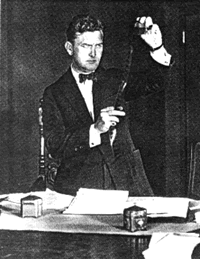
Thomas Ince. Culver, who envisioned a city with both
housing and industry, convinced Ince to move his
Inceville Studio from the beach in Santa Monica to
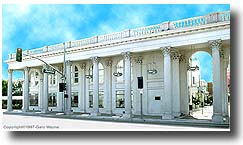
prime property on Washington Boulevard. The same
year, Ince established Triangle Studios with D. W.
Griffith and Mack Sennett, building the landmark
Colonnade, a two-story entrance gate and
administration building fronting on Washington.
Culver City, saw Thomas Ince, a famous filmmaker,
shooting a scene from a western near his newly
developing community of Culver City. Indians in
warpaint rowed canoes down La Ballona Creek as Inceâ
€™s crew filmed the spectacle.
Thomas Ince. Culver, who envisioned a city with both
housing and industry, convinced Ince to move his
Inceville Studio from the beach in Santa Monica to
prime property on Washington Boulevard. The same
year, Ince established Triangle Studios with D. W.
Griffith and Mack Sennett, building the landmark
Colonnade, a two-story entrance gate and
administration building fronting on Washington.
It’s down at the end of
our block, and I look at it
often, imagining classic cars
passing through that gate,
much too narrow for todayâ
€™s automobiles. Ince
also built glassed-in stages
and sheds to serve as
shops.
our block, and I look at it
often, imagining classic cars
passing through that gate,
much too narrow for todayâ
€™s automobiles. Ince
also built glassed-in stages
and sheds to serve as
shops.
The first movie produced by
Triangle at their new location
was Civilization. Actors who
worked at the new studios
included the western star
William S. Hart and Billie
Burke, who is probably best
known today as the “good
witch� in the Wizard of Oz.
I know her as the woman I was
named for.
Triangle at their new location
was Civilization. Actors who
worked at the new studios
included the western star
William S. Hart and Billie
Burke, who is probably best
known today as the “good
witch� in the Wizard of Oz.
I know her as the woman I was
named for.
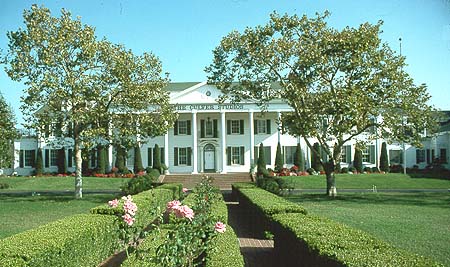
In 1918, Ince sold out to Griffith and
Sennett and bought a second property from
Harry Culver. The next year, he built a
colonial mansion to house the administrative
offices of the Thomas H. Ince Studios. It
was located east of the Colonnade, at 9336
Washington Boulevard, and is now known
as Culver Studios. Across the street were
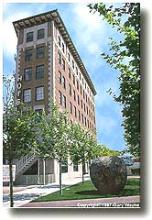
Culver’s offices in the flatiron building
that is now the Culver Hotel.
Sennett and bought a second property from
Harry Culver. The next year, he built a
colonial mansion to house the administrative
offices of the Thomas H. Ince Studios. It
was located east of the Colonnade, at 9336
Washington Boulevard, and is now known
as Culver Studios. Across the street were
Culver’s offices in the flatiron building
that is now the Culver Hotel.
In 1924, Ince died of what was officially called a heart attack
on a weekend cruise to celebrate his 42nd birthday. The trip
was on William Randolph Hearst’s lavish yacht, the
Oneida. Other guests included actor Charlie Chaplin,
columnist Louella Parsons, Hearst himself and his lover,
actress Marion Davies.
on a weekend cruise to celebrate his 42nd birthday. The trip
was on William Randolph Hearst’s lavish yacht, the
Oneida. Other guests included actor Charlie Chaplin,
columnist Louella Parsons, Hearst himself and his lover,
actress Marion Davies.
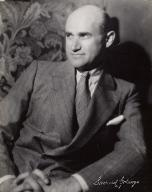
Samuel Goldwyn. Schmuel Gelbfisz
left his native Poland, on foot and
penniless, emigrating first to England and
then to America, where he made a
fortune as a salesman and became
enamored with movies. A few name
changes and broken partnerships later, he
bought Ince Studios from Ince's widow
Eleanor, renaming it Samuel Goldwyn
Pictures.
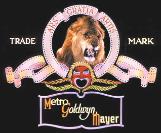
Goldwyn added more stages and
structures. He commissioned the
Phillip Goodman Agency in New York. to
develop a trademark. A Columbia
University dropout, Howard Dietz took
Columbia’s “Leo the Lion� and
added the Latin phrase, “Ars Gratia
Artis� (Art for Art’s Sake) to form
one of the most recognizable trademarks
ever.
left his native Poland, on foot and
penniless, emigrating first to England and
then to America, where he made a
fortune as a salesman and became
enamored with movies. A few name
changes and broken partnerships later, he
bought Ince Studios from Ince's widow
Eleanor, renaming it Samuel Goldwyn
Pictures.
Goldwyn added more stages and
structures. He commissioned the
Phillip Goodman Agency in New York. to
develop a trademark. A Columbia
University dropout, Howard Dietz took
Columbia’s “Leo the Lion� and
added the Latin phrase, “Ars Gratia
Artis� (Art for Art’s Sake) to form
one of the most recognizable trademarks
ever.

Louis B. Mayer. In 1924, when Metro
Pictures, Goldwyn Pictures and the Louis
B. Mayer Company merged to form
Metro Goldwyn, Mayer, its vice
president, insisted on adding his name.
Despite the fact that Samuel Goldwyn
had lost control of his company, his
name and trademark remained a part of
it. Mayer also inherited Goldwyn's most
recent production, Ben-Hur. Though
the costliest film of its time, it became
one of the biggest grossers of all time.
Pictures, Goldwyn Pictures and the Louis
B. Mayer Company merged to form
Metro Goldwyn, Mayer, its vice
president, insisted on adding his name.
Despite the fact that Samuel Goldwyn
had lost control of his company, his
name and trademark remained a part of
it. Mayer also inherited Goldwyn's most
recent production, Ben-Hur. Though
the costliest film of its time, it became
one of the biggest grossers of all time.
Though poorly educated, Goldwyn focused on quality. He had an
eye for talent, discovering actor Gary Cooper and hiring William
Wyler to direct his early pictures. His writers included Ben Hecht,
Sidney Howard and Lillian Hellman.
He was also known for his explosive temper and for such
incongruous sayings as "A bachelor's life is no life for a single man,"
"A verbal contract isn't worth the paper it's written on," and "Anyone
who would go to a psychiatrist ought to have his head examined."
eye for talent, discovering actor Gary Cooper and hiring William
Wyler to direct his early pictures. His writers included Ben Hecht,
Sidney Howard and Lillian Hellman.
He was also known for his explosive temper and for such
incongruous sayings as "A bachelor's life is no life for a single man,"
"A verbal contract isn't worth the paper it's written on," and "Anyone
who would go to a psychiatrist ought to have his head examined."
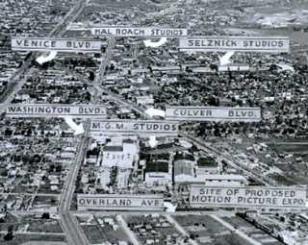
By the 1930s, Metro-Goldwyn Mayer made more money than
any other studio in Hollywood.
Mayer created the "star system," boasting that MGM had "more
stars than there are in the heavens," including John Gilbert, Lillian
Gish and Lon Chaney and later Greta Garbo, Clark Gable, James
Stewart and Elizabeth Taylor.
At its height, MGM released a new feature film every week.
any other studio in Hollywood.
Mayer created the "star system," boasting that MGM had "more
stars than there are in the heavens," including John Gilbert, Lillian
Gish and Lon Chaney and later Greta Garbo, Clark Gable, James
Stewart and Elizabeth Taylor.
At its height, MGM released a new feature film every week.