
December 2011
Billie Silvey

In Europe in the Middle Ages, the church dominated society as the
spires of its churches and cathedrals dominated the skylines of its
towns and cities. At the seat of every bishop, a cathedral would be
constructed. It was as large and tall as possible, built over the course
of years, decades, even centuries to the glory of God, the instruction
of the illiterate peasantry, and to reflect the power of the church itself.
In those rare instances when the skills of a builder, the spiritual as well
as political aspirations of the bishop and the growing wealth of the
populace intersected, those cathedrals attained a beauty that is
awe-inspiring. The cathedral at Chartres in France is an example of
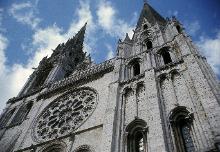
such a cathedral. It is complete with spires, flying buttresses, stained
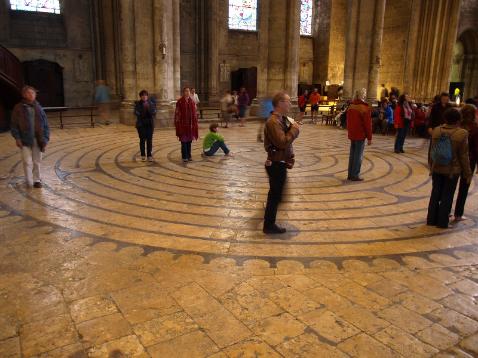
glass windows, and an intricate eleven-circuit labyrinth inset in the
floor.
The labyrinth at Chartres was built around 1200. It is laid into the
floor in a style sometimes referred to as a pavement maze.
Walking the labyrinth frees your mind and lets your thoughts flow
freely. It can represent a spiritual pilgrimage to greater spiritual
heights or the broader walk of life. It can be walked as a quest, a
journey toward a closer relationship with God, or a sign of penance
and sorrow for sins. In that case, the penitent may walk the labyrinth
on his or her knees.
Labyrinths come in three basic designs--seven circuit, eleven circuit
and twelve circuit. They can be used for reflection, meditation or
prayer.
spires of its churches and cathedrals dominated the skylines of its
towns and cities. At the seat of every bishop, a cathedral would be
constructed. It was as large and tall as possible, built over the course
of years, decades, even centuries to the glory of God, the instruction
of the illiterate peasantry, and to reflect the power of the church itself.
In those rare instances when the skills of a builder, the spiritual as well
as political aspirations of the bishop and the growing wealth of the
populace intersected, those cathedrals attained a beauty that is
awe-inspiring. The cathedral at Chartres in France is an example of
such a cathedral. It is complete with spires, flying buttresses, stained
glass windows, and an intricate eleven-circuit labyrinth inset in the
floor.
The labyrinth at Chartres was built around 1200. It is laid into the
floor in a style sometimes referred to as a pavement maze.
Walking the labyrinth frees your mind and lets your thoughts flow
freely. It can represent a spiritual pilgrimage to greater spiritual
heights or the broader walk of life. It can be walked as a quest, a
journey toward a closer relationship with God, or a sign of penance
and sorrow for sins. In that case, the penitent may walk the labyrinth
on his or her knees.
Labyrinths come in three basic designs--seven circuit, eleven circuit
and twelve circuit. They can be used for reflection, meditation or
prayer.
Medieval Meditation
Labyrinths
Labyrinths


Recently, labyrinths have been constructed in Grace Cathedral in
San Francisco and in Christ the King Lutheran Church in Torrance,
California.
San Francisco and in Christ the King Lutheran Church in Torrance,
California.
The rose window in the west wall of
Chartres Cathedral is the same size
and distance from the intersection of
the wall and floor as the labyrinth is.
If the wall could be bent down to the
floor, the two circles would intersect.
Labyrinths reached the height of their
popularity in the 13th and 14th
centuries in France, Tuscany and
Scandinavia. Grand pavement
labyrinths can be found in the great
cathedrals of Rheims and Amiens and
the Duomo of Siena.
Chartres Cathedral is the same size
and distance from the intersection of
the wall and floor as the labyrinth is.
If the wall could be bent down to the
floor, the two circles would intersect.
Labyrinths reached the height of their
popularity in the 13th and 14th
centuries in France, Tuscany and
Scandinavia. Grand pavement
labyrinths can be found in the great
cathedrals of Rheims and Amiens and
the Duomo of Siena.