
May 2010
Billie Silvey

When I was in second grade, I got my first pair of glasses. They
changed my world, or at least my perception of the world. They
sharpened the edges of everything. Trees went from blurs of
green and dull brown to collections of discrete leaves and
textured bark, wood clarified into grains and gradations. And a
particular shade of deep rich brown I’d never seen beforeâ
€”or rather, had experienced as a flat muddy gray--suddenly
became my favorite color.
My world had become richer and more beautiful, thanks to
optics.
Generally, light travels in a straight line unless it strikes an object
which causes it to be bent or absorbed. The lenses of my new
glasses bent the light rays in such a way that they focused more
sharply on my retina. It is similar to what happens when you
focus binoculars or a microscope.
The two basic ways light is bent is by reflection or refraction.
Reflection occurs when light strikes a mirror or other reflective
surface. The angle of incoming light equals the angle of reflected
light.
Refraction occurs when light traveling through one transparent
substance enters another. As light moves from an optically less
dense medium, like air, to an optically denser one, like water, it
slows. We perceive the different speed of the light as a
difference in the size and position of the object. The image we
see appears to be bent, or to exist in a different plane.
changed my world, or at least my perception of the world. They
sharpened the edges of everything. Trees went from blurs of
green and dull brown to collections of discrete leaves and
textured bark, wood clarified into grains and gradations. And a
particular shade of deep rich brown I’d never seen beforeâ
€”or rather, had experienced as a flat muddy gray--suddenly
became my favorite color.
My world had become richer and more beautiful, thanks to
optics.
Generally, light travels in a straight line unless it strikes an object
which causes it to be bent or absorbed. The lenses of my new
glasses bent the light rays in such a way that they focused more
sharply on my retina. It is similar to what happens when you
focus binoculars or a microscope.
The two basic ways light is bent is by reflection or refraction.
Reflection occurs when light strikes a mirror or other reflective
surface. The angle of incoming light equals the angle of reflected
light.
Refraction occurs when light traveling through one transparent
substance enters another. As light moves from an optically less
dense medium, like air, to an optically denser one, like water, it
slows. We perceive the different speed of the light as a
difference in the size and position of the object. The image we
see appears to be bent, or to exist in a different plane.


Electromagnetic Spectrum
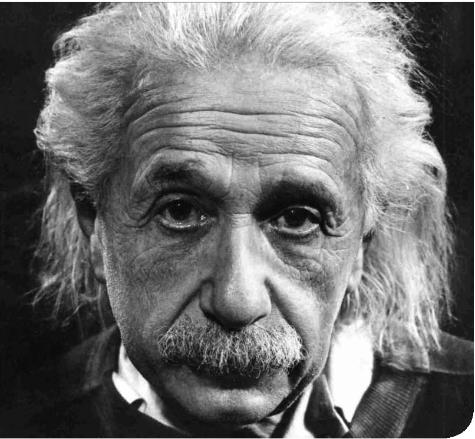
Albert Einstein once said he wanted the
rest of his life to reflect on the nature of
light. The implication was that light is so
complicated, it could take that long, and
still the subject wouldn’t be exhausted.
Einstein was one of a chain of scientists
stretching back to Copernicus who
worked on light theory and helped
developed quantum theory.
Quantum mechanics is the essence of every
interaction in the universe. Everything was
created from light and all interactions
proceed by way of light.
A quantum is the smallest packet of energy
that can be exchanged. It applies both to
photosynthesis, the creative power of light
to produce and power green plants, and to
optics, the exciting of atoms in our eyes
that enable us to see.
rest of his life to reflect on the nature of
light. The implication was that light is so
complicated, it could take that long, and
still the subject wouldn’t be exhausted.
Einstein was one of a chain of scientists
stretching back to Copernicus who
worked on light theory and helped
developed quantum theory.
Quantum mechanics is the essence of every
interaction in the universe. Everything was
created from light and all interactions
proceed by way of light.
A quantum is the smallest packet of energy
that can be exchanged. It applies both to
photosynthesis, the creative power of light
to produce and power green plants, and to
optics, the exciting of atoms in our eyes
that enable us to see.
Light can be thought of as either particles or electromagnetic waves.
Some principles of optics work using the particle model; others using
the wave. Most work for either.
Different photons or wavelengths are experienced as different colors,
with different amounts of energy. Blue photons have greater energy
than red. When an object appears red, all red photons are reflected,
while other colors are absorbed.
When considered as waves, the distance from one part of the wave
to the corresponding part of the next wave makes up a different
color. Blues have a shorter wave length than reds.
The more intense the light, the greater number of photons. The
relationship between energy, wavelength and color are seen in the
chart below.
Some principles of optics work using the particle model; others using
the wave. Most work for either.
Different photons or wavelengths are experienced as different colors,
with different amounts of energy. Blue photons have greater energy
than red. When an object appears red, all red photons are reflected,
while other colors are absorbed.
When considered as waves, the distance from one part of the wave
to the corresponding part of the next wave makes up a different
color. Blues have a shorter wave length than reds.
The more intense the light, the greater number of photons. The
relationship between energy, wavelength and color are seen in the
chart below.
OPTICS
