
April 2010
Billie Silvey

The
Poetry
Of
Gardens
Poetry
Of
Gardens

Last year, the Culver Palms Church of Christ held a rummage sale in
its parking lot. We cleaned out our houses and brought unused
items to raise money for our benevolence fund. The Recession was
just beginning, and our resources were strained. In just one day, we
raised the money we needed to replenish the fund, sent a shipment
of summer clothes to Uganda, and donated a small truckload of
leftovers to the Salvation Army.
It was a chance to meet our neighbors and work together sorting,
displaying and selling the items. It was also a chance to pick up
things we could use. I bought some colored T-shirts, some childrenâ
€™s videos, and some books that just looked interesting. At those
prices, you could afford to try things out.
One of the books I purchased that day was called The Poetics of
Gardens. Written by Charles W. Moore, William J. Mitchell and
William Turnbull, Jr., it features photos, diagrams and drawings of
gardens of various styles all over the world.
Published in 1988 by MIT Press, it shows how the elements of a
garden—water, trees, flowers, rocks, sunlight and shadow—are
balanced and contrasted to create spaces of beauty and peace.
Natural landscapes, the authors point out, may be beautiful in
themselves, but until the elements have been selected and organized,
they do not become a garden.
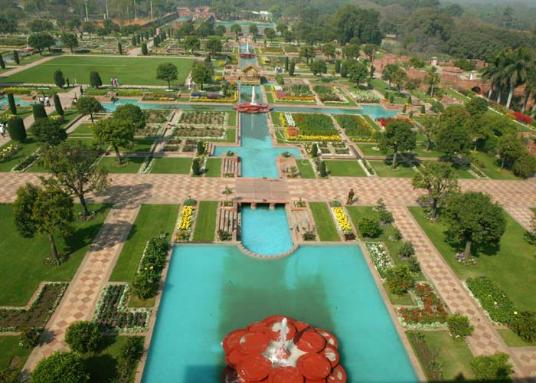
There are basically two types of gardens: the first is the formal
garden where each element is balanced with another, where the
garden is divided (often by hedges or paths) into geometric forms
with a taller element in the middle echoing the same form opposite.
French gardens are examples of this type, and they are based on the
prototypical walled Persian Paradise garden.
its parking lot. We cleaned out our houses and brought unused
items to raise money for our benevolence fund. The Recession was
just beginning, and our resources were strained. In just one day, we
raised the money we needed to replenish the fund, sent a shipment
of summer clothes to Uganda, and donated a small truckload of
leftovers to the Salvation Army.
It was a chance to meet our neighbors and work together sorting,
displaying and selling the items. It was also a chance to pick up
things we could use. I bought some colored T-shirts, some childrenâ
€™s videos, and some books that just looked interesting. At those
prices, you could afford to try things out.
One of the books I purchased that day was called The Poetics of
Gardens. Written by Charles W. Moore, William J. Mitchell and
William Turnbull, Jr., it features photos, diagrams and drawings of
gardens of various styles all over the world.
Published in 1988 by MIT Press, it shows how the elements of a
garden—water, trees, flowers, rocks, sunlight and shadow—are
balanced and contrasted to create spaces of beauty and peace.
Natural landscapes, the authors point out, may be beautiful in
themselves, but until the elements have been selected and organized,
they do not become a garden.
There are basically two types of gardens: the first is the formal
garden where each element is balanced with another, where the
garden is divided (often by hedges or paths) into geometric forms
with a taller element in the middle echoing the same form opposite.
French gardens are examples of this type, and they are based on the
prototypical walled Persian Paradise garden.
The second type is the informal garden, where the elements may be
just as carefully chosen, but are arranged asymmetrically and
selected to mimic nature itself. Japanese and English gardens are
examples of this type, based on the prototypical Chinese gardens.
Paths are curved and vistas discovered as you walk through the
miniature landscape.
just as carefully chosen, but are arranged asymmetrically and
selected to mimic nature itself. Japanese and English gardens are
examples of this type, based on the prototypical Chinese gardens.
Paths are curved and vistas discovered as you walk through the
miniature landscape.
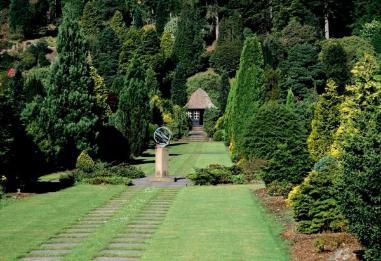
Whether stark or lush, each type of garden has a beauty all
its own. Here are seven more specific styles of gardens:
its own. Here are seven more specific styles of gardens:
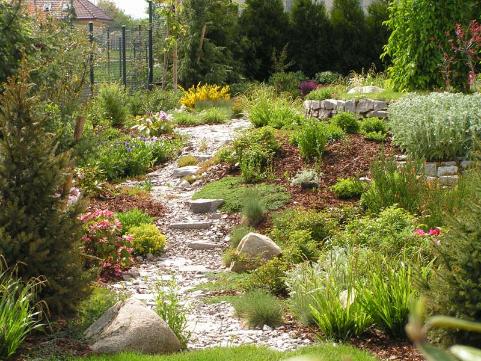
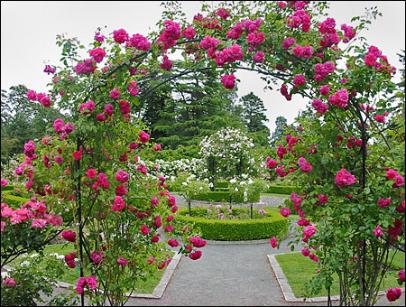
1) Rose Gardens. Rose gardens
are generally of an English Victorian
style, with plots of roses, trellises or
arbors for vining roses, and Greek
or Gothic statues, paths and
benches for enjoying the view.
are generally of an English Victorian
style, with plots of roses, trellises or
arbors for vining roses, and Greek
or Gothic statues, paths and
benches for enjoying the view.
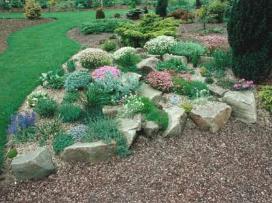
2) Rock Gardens. Rock gardens
feature various sizes and types of
stones with plants growing among,
between and over them. Rock
gardens can appear more natural than
other, more formally arranged gardens.
feature various sizes and types of
stones with plants growing among,
between and over them. Rock
gardens can appear more natural than
other, more formally arranged gardens.
3) French Gardens. French gardens
are among the more formal gardens,
with geometric layouts and a perfect
balance of elements.
Many French gardens have hedge
mazes and topiaries, plants trimmed
into the shapes of animals or forms
never found in nature.
are among the more formal gardens,
with geometric layouts and a perfect
balance of elements.
Many French gardens have hedge
mazes and topiaries, plants trimmed
into the shapes of animals or forms
never found in nature.
4) Japanese Gardens. Japanese
gardens feature rocks, water, lanterns,
bridges or stepping stones. They may
include a small structure, like a
teahouse, with views of the rest of the
garden.
gardens feature rocks, water, lanterns,
bridges or stepping stones. They may
include a small structure, like a
teahouse, with views of the rest of the
garden.
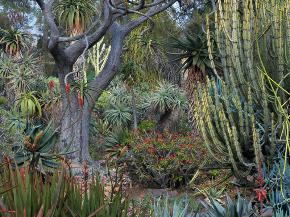
5) Desert Gardens. Desert gardens
include various cacti and other plants
native to dry environments around the
world.
include various cacti and other plants
native to dry environments around the
world.
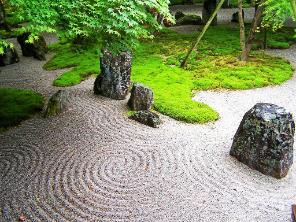
6) Zen Gardens. Zen gardens
incorporate raked sand and
stones and are places for peace
and meditation.
incorporate raked sand and
stones and are places for peace
and meditation.
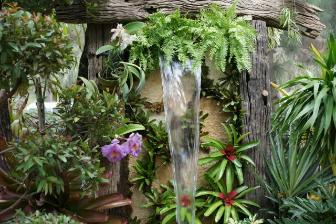
7) Tropical Gardens. Tropical
gardens include water and vining,
brightly-colored jungle-type plants.
gardens include water and vining,
brightly-colored jungle-type plants.