

Billie Silvey
May 2007
Have you been watching the new Discovery series, Planet
Earth? If you haven't, you might consider renting it. It's one
of the most stunningly beautiful nature series I've ever seen.
The camera crew spent years getting rare and remarkable
footage.
The show takes an ecological perspective, showing life in
varied environments around the world--deserts, deep oceans,
fresh water, forests. A similar presentation could be made
based on the seasons of the year.
The seasons are caused by the tilt of the earth, which remains
the same as the earth circles the sun. Each season lasts about
three months, or a quarter of the year, and each has its own
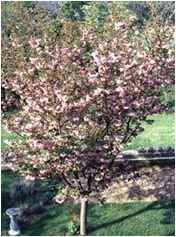
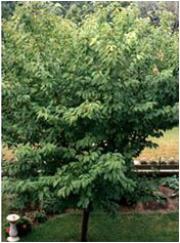
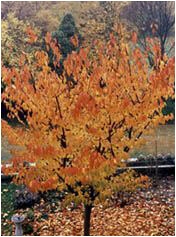
special beauty. You can see it in the trees and in the colors of
the garden, as illustrated by these pictures of a single tree and
scenes from Kew Gardens through the year.
Earth? If you haven't, you might consider renting it. It's one
of the most stunningly beautiful nature series I've ever seen.
The camera crew spent years getting rare and remarkable
footage.
The show takes an ecological perspective, showing life in
varied environments around the world--deserts, deep oceans,
fresh water, forests. A similar presentation could be made
based on the seasons of the year.
The seasons are caused by the tilt of the earth, which remains
the same as the earth circles the sun. Each season lasts about
three months, or a quarter of the year, and each has its own
special beauty. You can see it in the trees and in the colors of
the garden, as illustrated by these pictures of a single tree and
scenes from Kew Gardens through the year.
The
Seasons
Seasons
Spring
| Summer |
When the north pole is pointing
toward the sun, our hemisphere
receives the sun's rays more
directly, making it warmer. The
days last longer, and we call it
summer.
Solstice is a word for those times
of extreme temperature when the
sun is closest and furthest from us.
Solstice means "sun stands still."
The summer solstice, or longest day
of the year, is June 21st or 22nd.
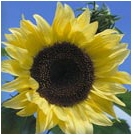
In summer, the strong, bold colors
of sunflowers, dahlias, zinneas and
snapdragons stand out against the
lush canopy of green.
toward the sun, our hemisphere
receives the sun's rays more
directly, making it warmer. The
days last longer, and we call it
summer.
Solstice is a word for those times
of extreme temperature when the
sun is closest and furthest from us.
Solstice means "sun stands still."
The summer solstice, or longest day
of the year, is June 21st or 22nd.
In summer, the strong, bold colors
of sunflowers, dahlias, zinneas and
snapdragons stand out against the
lush canopy of green.
Fall
The second temperate season, the
autumnal equinox marking the
beginning of fall, is September 22nd
or 23rd.
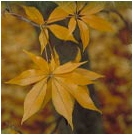
The rich fall colors result when the
trees stop making the chlorophyll that
makes leaves green, allowing us to
see the other pigments in the leaves.
The best fall folliage I've seen was in
the Shenandoah Valley in Virginia. I
also love the liquid amber trees in
Los Angeles as they turn red and
then purple.
autumnal equinox marking the
beginning of fall, is September 22nd
or 23rd.
The rich fall colors result when the
trees stop making the chlorophyll that
makes leaves green, allowing us to
see the other pigments in the leaves.
The best fall folliage I've seen was in
the Shenandoah Valley in Virginia. I
also love the liquid amber trees in
Los Angeles as they turn red and
then purple.
| Winter |
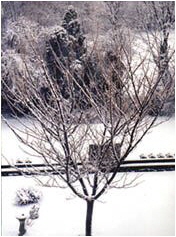
When the north pole points away
from our hemisphere, the sun hits us
less directly. The nights are long,
and the days are short and cold.
The winter solstice, or shortest
day, is December 21st or 22nd.
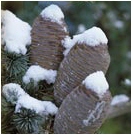
Evergreens add dark green and
berries, a touch of red to the
black-and-white pallet. Pine cones
and berries provide life-sustaining
food in the bleak season, and a
mantle of snow sprinkles the scene
with glitter as plants die back to be
reborn next spring.
from our hemisphere, the sun hits us
less directly. The nights are long,
and the days are short and cold.
The winter solstice, or shortest
day, is December 21st or 22nd.
Evergreens add dark green and
berries, a touch of red to the
black-and-white pallet. Pine cones
and berries provide life-sustaining
food in the bleak season, and a
mantle of snow sprinkles the scene
with glitter as plants die back to be
reborn next spring.
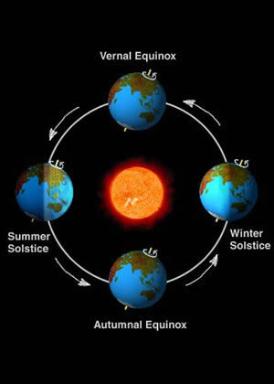
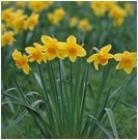
Spring begins with the new buds and
blossoms of the vernal equinox, a
time of temperate weather when day
and night are equal in length. It occurs
on March 20th or 21st.
Spring colors the garden in pastels.
Its
flowers include daffodils, tulips, lilies
and irises.
blossoms of the vernal equinox, a
time of temperate weather when day
and night are equal in length. It occurs
on March 20th or 21st.
Spring colors the garden in pastels.
Its
flowers include daffodils, tulips, lilies
and irises.