
April 2009
Billie Silvey


Timeline of the West
1803-1806 The Lewis and Clark Expedition
When Captain Meriwether Lewis was selected by Thomas Jefferson
to lead the transcontinental expedition exploring the Louisiana
Purchase, he studied with members of the faculty at the University of
Pennsylvania and gathered information about his proposed route. He
selected William Clark to accompany him as co-leader. Clark spent
several months studying astronomy and map-making. They set out by
keelboat to the confluence of the Missouri and Mississippi rivers,
journeying up the Missouri the next spring.
By October, they had reached the Mandan villages in present-day
North Dakota and decided to stay with them through the winter.
There they secured the services of Sacagawea, a Shoshone guide and
interpreter, who “reconciles all the Indians as to our friendly
intentions—a woman with a party of men is a token of peace,� as
Clark wrote in his journal.
Between April and August of 1805, the 33 members of the
expedition traveled up the Missouri to its northern limit, where a band
of Shoshone, led by Sacagawea’s brother, provided horses for
the climb up the Rocky Mountains.
By late September, they had crossed the Bitterroot Mountains, where
they were taken in by the Nez Perce. Traveling down the Columbia
River, they reached the Pacific Ocean in November, spending the
winter there and returning in 1806 over roughly the same route.
Upon their return, Lewis was appointed governor of the Louisiana
Territory, and Clark became principal Indian agent for the Louisiana
Territory, then governor of the newly-formed Missouri Territory.
When Captain Meriwether Lewis was selected by Thomas Jefferson
to lead the transcontinental expedition exploring the Louisiana
Purchase, he studied with members of the faculty at the University of
Pennsylvania and gathered information about his proposed route. He
selected William Clark to accompany him as co-leader. Clark spent
several months studying astronomy and map-making. They set out by
keelboat to the confluence of the Missouri and Mississippi rivers,
journeying up the Missouri the next spring.
By October, they had reached the Mandan villages in present-day
North Dakota and decided to stay with them through the winter.
There they secured the services of Sacagawea, a Shoshone guide and
interpreter, who “reconciles all the Indians as to our friendly
intentions—a woman with a party of men is a token of peace,� as
Clark wrote in his journal.
Between April and August of 1805, the 33 members of the
expedition traveled up the Missouri to its northern limit, where a band
of Shoshone, led by Sacagawea’s brother, provided horses for
the climb up the Rocky Mountains.
By late September, they had crossed the Bitterroot Mountains, where
they were taken in by the Nez Perce. Traveling down the Columbia
River, they reached the Pacific Ocean in November, spending the
winter there and returning in 1806 over roughly the same route.
Upon their return, Lewis was appointed governor of the Louisiana
Territory, and Clark became principal Indian agent for the Louisiana
Territory, then governor of the newly-formed Missouri Territory.


1830-1836 The Artist George Catlin
The artist accompanied General William Clark on a diplomatic
mission up the Mississippi River into Native American territory.
Between 1830 and 1836, he visited 50 tribes, including the Pawnee,
Omaha and Ponca in the south and the Mandan, Cheyenne, Crow,
Assiniboine and Blackfeet to the north.
He painted over 500 depictions of Native Americans and garnered a
substantial collection of artifacts, assembling them into his Indian
Gallery and delivering lectures on his recollections in Pittsburgh,
Cincinnati, and New York.
When the U.S. government refused to purchase his collection, Catlin
toured with them to such European capitals as London, Brussels and
Paris. The French critic Charles Boudelaire remarked on the
paintings, “M. Catlin has captured the proud, free character and
noble expression of these splendid fellows in a masterly way.�
In 1841, Catlin published Manners, Customs and Condition of the
North American Indians in two volumes with about 300
engravings. The nearly complete surviving set of Catlin’s first
Indian Gallery is now part of the Smithsonian American Art museumâ
€™s collection.
The artist accompanied General William Clark on a diplomatic
mission up the Mississippi River into Native American territory.
Between 1830 and 1836, he visited 50 tribes, including the Pawnee,
Omaha and Ponca in the south and the Mandan, Cheyenne, Crow,
Assiniboine and Blackfeet to the north.
He painted over 500 depictions of Native Americans and garnered a
substantial collection of artifacts, assembling them into his Indian
Gallery and delivering lectures on his recollections in Pittsburgh,
Cincinnati, and New York.
When the U.S. government refused to purchase his collection, Catlin
toured with them to such European capitals as London, Brussels and
Paris. The French critic Charles Boudelaire remarked on the
paintings, “M. Catlin has captured the proud, free character and
noble expression of these splendid fellows in a masterly way.�
In 1841, Catlin published Manners, Customs and Condition of the
North American Indians in two volumes with about 300
engravings. The nearly complete surviving set of Catlin’s first
Indian Gallery is now part of the Smithsonian American Art museumâ
€™s collection.

1860-1861 The Pony Express
From April 1860 to October 1861, the riders of the Pony Express
provided fast mail service between St. Joseph, Missouri, and
Sacramento, California.
Messages were carried by horseback in relay across the prairies,
plains, deserts and mountains of the Western United States, reducing
the time for mail delivery between the Atlantic and Pacific coasts to
about 10 days. Some 190 stations were set up at intervals of about 10
miles along the 2,000-mile route.
A rider would change to a fresh horse at each station, throwing the
mochila, or pouch over the saddle and mounting on top of it. Each
corner had a padlocked cantina or pocket to carry the mail.
Riders could not weigh over 125 pounds. In addition to the mochila,
they carried a water sack and a revolver, riding day and night, winter
and summer.
The Pony Express announced its closure on October 26, 1861, two
days after the Transcontinental Telegraph reached Salt Lake City,
connecting Omaha, Nebraska and Sacramento.
From April 1860 to October 1861, the riders of the Pony Express
provided fast mail service between St. Joseph, Missouri, and
Sacramento, California.
Messages were carried by horseback in relay across the prairies,
plains, deserts and mountains of the Western United States, reducing
the time for mail delivery between the Atlantic and Pacific coasts to
about 10 days. Some 190 stations were set up at intervals of about 10
miles along the 2,000-mile route.
A rider would change to a fresh horse at each station, throwing the
mochila, or pouch over the saddle and mounting on top of it. Each
corner had a padlocked cantina or pocket to carry the mail.
Riders could not weigh over 125 pounds. In addition to the mochila,
they carried a water sack and a revolver, riding day and night, winter
and summer.
The Pony Express announced its closure on October 26, 1861, two
days after the Transcontinental Telegraph reached Salt Lake City,
connecting Omaha, Nebraska and Sacramento.

1865-1895 Cattle Drives
The end of the American Civil War brought a great demand
for meat in the northeastern United States. At that time,
there were over 5 million head of Longhorn cattle in Texas.
Cowboys took part in cattle drives, herding these cattle from
Texas to railroad towns of Abilene, Dodge City and
Wichita, Kansas.
Major routes included the Chisholm and the
Goodnight-Loving trails. It would take from 12-16 weeks
to drive cattle along the 1,000-mile routes.
Each drive would include several thousand head of cattle.
The trail boss would ride ahead, scouting for water, grass
and camping sites. Two cowboys rode on either side ahead
of the herd. Flank riders kept the cattle in line, two or three
abreast. Drag riders kept stragglers up at the rear.
The end of the American Civil War brought a great demand
for meat in the northeastern United States. At that time,
there were over 5 million head of Longhorn cattle in Texas.
Cowboys took part in cattle drives, herding these cattle from
Texas to railroad towns of Abilene, Dodge City and
Wichita, Kansas.
Major routes included the Chisholm and the
Goodnight-Loving trails. It would take from 12-16 weeks
to drive cattle along the 1,000-mile routes.
Each drive would include several thousand head of cattle.
The trail boss would ride ahead, scouting for water, grass
and camping sites. Two cowboys rode on either side ahead
of the herd. Flank riders kept the cattle in line, two or three
abreast. Drag riders kept stragglers up at the rear.

1867-1894 John Wesley Powell, Geologist
John Wesley Powell, soldier, geologist and explorer of the
American West, was the first person to ride the Colorado River
through the Grand Canyon.
The son of an immigrant English preacher, he was loyal to the
Union and the cause of abolishing slavery. In the Battle of Shiloh,
he lost most of one arm.
From 1867, he led a series of expeditions into the Rocky
Mountains. In 1869, he explored the Grand Canyon. He started
with nine men and four boats, but one man quit after the first
month. Another three left at Separation Rapid, but they were later
killed mysteriously. He retraced the route in 1871-72, producing
photographs, an accurate map, and other documents.
John Wesley Powell, soldier, geologist and explorer of the
American West, was the first person to ride the Colorado River
through the Grand Canyon.
The son of an immigrant English preacher, he was loyal to the
Union and the cause of abolishing slavery. In the Battle of Shiloh,
he lost most of one arm.
From 1867, he led a series of expeditions into the Rocky
Mountains. In 1869, he explored the Grand Canyon. He started
with nine men and four boats, but one man quit after the first
month. Another three left at Separation Rapid, but they were later
killed mysteriously. He retraced the route in 1871-72, producing
photographs, an accurate map, and other documents.

1869 Transcontinental Railroad
The Pacific Railroad was completed in 1869 between Council
Bluffs, Iowa, and Alameda, California. By linking with the existing
railway network of the Eastern United States, the railroad
connected Atlantic and Pacific coasts.
One of the greatest American technological feats of the 19th
century, the railroad opened for traffic May 10, 1869, with the
driving of the "Last Spike" at Promontory Summit, Utah. It
replaced most of the existing stagecoach lines and wagon trains,
providing a cheaper and safer route for people and goods.
Army veterans and Irish and Chinese immigrants did most of the
work of building the Transconental Railroad. Much of the original
right-of-way is still owned and used today by the Union Pacific.
Telegraph lines were built along the railroad as it was being built,
contributing to rapid communication as well as transportation.
The Pacific Railroad was completed in 1869 between Council
Bluffs, Iowa, and Alameda, California. By linking with the existing
railway network of the Eastern United States, the railroad
connected Atlantic and Pacific coasts.
One of the greatest American technological feats of the 19th
century, the railroad opened for traffic May 10, 1869, with the
driving of the "Last Spike" at Promontory Summit, Utah. It
replaced most of the existing stagecoach lines and wagon trains,
providing a cheaper and safer route for people and goods.
Army veterans and Irish and Chinese immigrants did most of the
work of building the Transconental Railroad. Much of the original
right-of-way is still owned and used today by the Union Pacific.
Telegraph lines were built along the railroad as it was being built,
contributing to rapid communication as well as transportation.

1869 Women's Suffrage
Women in the West led the nation in
the struggle for voting rights. When
Wyoming Territory became a state in
1869, it approved full and equal
enfranchisement for women. "This
Shall be the Land for Women!"
journalist Caroline Nichols Churchill
said when Colorado extended the
vote in 1893.
The West symbolized political
equality and opportunity for women.
In 1916, Jennette Rankin of Montana
won the first woman's seat in the US
House of Representatives.
Women in the West led the nation in
the struggle for voting rights. When
Wyoming Territory became a state in
1869, it approved full and equal
enfranchisement for women. "This
Shall be the Land for Women!"
journalist Caroline Nichols Churchill
said when Colorado extended the
vote in 1893.
The West symbolized political
equality and opportunity for women.
In 1916, Jennette Rankin of Montana
won the first woman's seat in the US
House of Representatives.
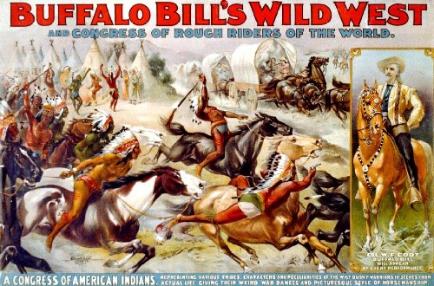
1883 Buffalo Bill Cody's First Wild West Show
Buffalo Bill Cody began touring with his Wild West Show, which featured a
series of historical scenes interspersed with rodeo-style events, sharp
shooting, and staged races in 1883.
The show ran for three decades and included such stars as "Wild Bill"
Hickok, Annie Oakley, Sitting Bull and Geronimo. It turned the West into
entertainment, paradoxically signaling its end as a reality.
Buffalo Bill Cody began touring with his Wild West Show, which featured a
series of historical scenes interspersed with rodeo-style events, sharp
shooting, and staged races in 1883.
The show ran for three decades and included such stars as "Wild Bill"
Hickok, Annie Oakley, Sitting Bull and Geronimo. It turned the West into
entertainment, paradoxically signaling its end as a reality.
1882 The Chinese Exclusion Act
The Chinese Exclusion Act of 1882 banned Chinese
immigration, indicating the extent of racism in the
old west.
Chinese had first immigrated during the gold rush of
1849, then were instrumental in building the
Transcontinental Railroad. Chinese were ideal
scapegoats, because their dress, hairstyles, and
language set them apart. They kept to their own
kind and were very industrious.
The first act barred immigration for 10 years, the
Geary Act of 1892 extended it for another 10 years,
and the Extension Act of 1904 made it permanent.
The Chinese Exclusion Act of 1882 banned Chinese
immigration, indicating the extent of racism in the
old west.
Chinese had first immigrated during the gold rush of
1849, then were instrumental in building the
Transcontinental Railroad. Chinese were ideal
scapegoats, because their dress, hairstyles, and
language set them apart. They kept to their own
kind and were very industrious.
The first act barred immigration for 10 years, the
Geary Act of 1892 extended it for another 10 years,
and the Extension Act of 1904 made it permanent.
1872 Yellowstone National Park
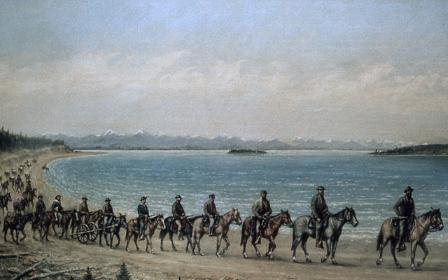
The land for Yellowstone National Park was set aside in 1872 to form the
first national park. The 3,468-square mile park is located primarily in
Wyoming but extends into montana and Idaho. It is known for its wildlife
and geothermal features.
Organized exploration did not begin until the late 1800s. More than 1,000
archeological sites have been explored within the park. Yellowstone Lake is
one of the largest high-altitude lakes in North America and is centered over
Yellowstone Caldera, the largest active volcano on the continent.
The land for Yellowstone National Park was set aside in 1872 to form the
first national park. The 3,468-square mile park is located primarily in
Wyoming but extends into montana and Idaho. It is known for its wildlife
and geothermal features.
Organized exploration did not begin until the late 1800s. More than 1,000
archeological sites have been explored within the park. Yellowstone Lake is
one of the largest high-altitude lakes in North America and is centered over
Yellowstone Caldera, the largest active volcano on the continent.