

Billie Silvey
Top Pop
Cats
Cats
January 2007
If you’ve ever watched a cat, sprawled seemingly
bonelessly in the warmest patch of sunshine, gliding silently
through the grass stalking a pigeon, or leaping with incredible
grace to a narrow ledge, then carefully placing paw after paw
to walk that ledge, you know how fascinating these animals can
be. Apparently people have always been fascinated by them.
bonelessly in the warmest patch of sunshine, gliding silently
through the grass stalking a pigeon, or leaping with incredible
grace to a narrow ledge, then carefully placing paw after paw
to walk that ledge, you know how fascinating these animals can
be. Apparently people have always been fascinated by them.
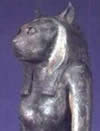
The Egyptians even had a god, Bast
(or Bastet) with the head of a cat and
the body of a woman.
Cats mentioned in the Bible include
lions (a symbol of strength) and
leopards (possibly cheetahs, a symbol
of speed).
(or Bastet) with the head of a cat and
the body of a woman.
Cats mentioned in the Bible include
lions (a symbol of strength) and
leopards (possibly cheetahs, a symbol
of speed).
In the Middle Ages, cats were
associated with witches.
associated with witches.
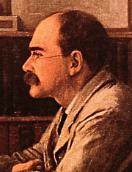
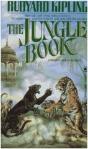
Cats came into our popular culture
through Rudyard Kipling’s
short stories in The Jungle Book
(1894). The Jungle Book is a
series of fables set in the jungles of
India which uses animals
anthropomorphically.
Eight tell the story of Mowgli, a
man-cub raised by wolves who is
befriended by a black panther,
Bagheera, and opposed by the
villainous Bengal tiger, Sheer Khan.
The Jungle Book inspired five live-
action movies from 1942 to '98 and
a Disney animated feature in 1967.
through Rudyard Kipling’s
short stories in The Jungle Book
(1894). The Jungle Book is a
series of fables set in the jungles of
India which uses animals
anthropomorphically.
Eight tell the story of Mowgli, a
man-cub raised by wolves who is
befriended by a black panther,
Bagheera, and opposed by the
villainous Bengal tiger, Sheer Khan.
The Jungle Book inspired five live-
action movies from 1942 to '98 and
a Disney animated feature in 1967.
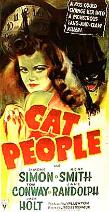
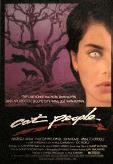
There were two film versions of
Cat People: a 1942 version, a
low-budget horror classic, one
of the first to explicitly link
horror and female sexuality, and
a 1982 version starring
Nastassja Kinski.
Cat People: a 1942 version, a
low-budget horror classic, one
of the first to explicitly link
horror and female sexuality, and
a 1982 version starring
Nastassja Kinski.
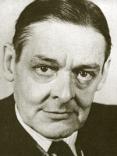
The poet T. S. Eliot wrote a collection of
poems, Old Possum’s Book of Practical
Cats. One features the mystery cat, Macavity, â
€œthe bafflement of Scotland Yard, the Flying
Squad’s despair: For when they reach the
scene of crime, Macavity’s not there.�
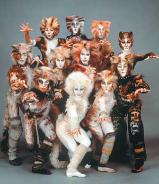
The long-running Broadway musical Cats was
based loosely on Eliot’s poems.
poems, Old Possum’s Book of Practical
Cats. One features the mystery cat, Macavity, â
€œthe bafflement of Scotland Yard, the Flying
Squad’s despair: For when they reach the
scene of crime, Macavity’s not there.�
The long-running Broadway musical Cats was
based loosely on Eliot’s poems.
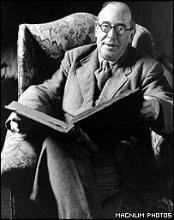
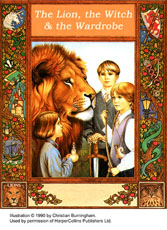
The seven books of C. S. Lewis’s
Chronicles of Narnia, published in the
early 1950’s, feature three children
who reach a magic land by going through
the back of a wardrobe. The majestic lion,
Aslan, is a Christ figure who dominates the
series.
The first book in the series, The Lion, the
Witch and the Wardrobe, came out in
1950. Then came Prince Caspian (1951),
The Voyage of the Dawn Treader (1952),
The Silver Chair (1953), The Horse and
His Boy (1954), and The Magician’s
Nephew (1955). The series climaxed with
The Last Battle (1956).
Chronicles of Narnia, published in the
early 1950’s, feature three children
who reach a magic land by going through
the back of a wardrobe. The majestic lion,
Aslan, is a Christ figure who dominates the
series.
The first book in the series, The Lion, the
Witch and the Wardrobe, came out in
1950. Then came Prince Caspian (1951),
The Voyage of the Dawn Treader (1952),
The Silver Chair (1953), The Horse and
His Boy (1954), and The Magician’s
Nephew (1955). The series climaxed with
The Last Battle (1956).
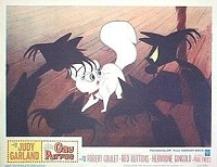
In 1962 and 1970, two full-length
animated features about cats, both set
in France at the turn of the century,
came out. Gay Purr-ee is the story of
Mewsette, voiced by Judy Garland, as
a housecat bored with country life who
runs away to Paris. There she is
exploited by the suave Meowrice, who
plans to sell her to a wealthy American
cat. It features a delightful series of
portraits of Mewsette drawn in the
style of famous French artists of the
time.
animated features about cats, both set
in France at the turn of the century,
came out. Gay Purr-ee is the story of
Mewsette, voiced by Judy Garland, as
a housecat bored with country life who
runs away to Paris. There she is
exploited by the suave Meowrice, who
plans to sell her to a wealthy American
cat. It features a delightful series of
portraits of Mewsette drawn in the
style of famous French artists of the
time.
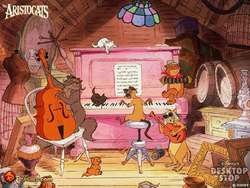
In The AristoCats, Duchess
and her three kittens are
kidnapped and left in the
country by Edgar, the jealous
butler. Rescued by Thomas Oâ
€™Malley, an alley cat, they
make their way back home,
encountering Scat Cat and his
band of jazz musicians on the
way.
and her three kittens are
kidnapped and left in the
country by Edgar, the jealous
butler. Rescued by Thomas Oâ
€™Malley, an alley cat, they
make their way back home,
encountering Scat Cat and his
band of jazz musicians on the
way.
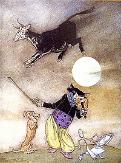
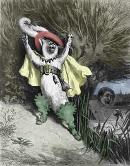
Cats figure prominently in children’s stories and nursery rhymes,
from the legend of Puss in Boots to the nursery rhyme, “Hey, Diddle
Diddle, the Cat and the Fiddle.�
from the legend of Puss in Boots to the nursery rhyme, “Hey, Diddle
Diddle, the Cat and the Fiddle.�
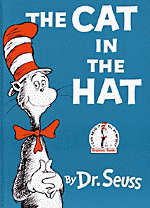
Dr. Seuss's The Cat in the
Hat (1957) was written to
make stories for beginning
readers more entertaining and
fun. Written in anapestic
tetrameter, the 1626-word
story includes only 236
different words.
A 1958 sequel, The Cat in
the Hat Comes Back, helps
teach the alphabet.
Hat (1957) was written to
make stories for beginning
readers more entertaining and
fun. Written in anapestic
tetrameter, the 1626-word
story includes only 236
different words.
A 1958 sequel, The Cat in
the Hat Comes Back, helps
teach the alphabet.
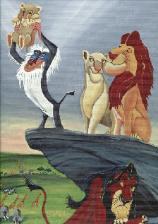
The next big animated feature was The
Lion King (1994), the third
highest-grossing animated feature film
ever released in the U. S. It became
an award-winning Broadway musical in
1997, featuring actors in animal
costumes and giant hollow puppets.
Nominated for 11 Tonys, it won six,
including Best Musical and Best
Director.
Lion King (1994), the third
highest-grossing animated feature film
ever released in the U. S. It became
an award-winning Broadway musical in
1997, featuring actors in animal
costumes and giant hollow puppets.
Nominated for 11 Tonys, it won six,
including Best Musical and Best
Director.
C. S. Lewis