Billie Silvey
January 2007
Big Cats
When I was growing up in West Texas, mountain lions, or pumas,
still roamed the canyons to the north of my home, and we could
sometimes hear their harsh screams when we drove past the
canyons in the evening. They were beautiful animals. I once saw
one that had been trapped too close to town and was being kept in
a cage before being released into the wild. It was a sensuous,
sinuous creature.
When I was growing up in West Texas, mountain lions, or pumas,
still roamed the canyons to the north of my home, and we could
sometimes hear their harsh screams when we drove past the
canyons in the evening. They were beautiful animals. I once saw
one that had been trapped too close to town and was being kept in
a cage before being released into the wild. It was a sensuous,
sinuous creature.

A World of
CATS
CATS

Except for one visit to a zoo in Fort
Worth, televised nature shows, and cut-
away scenes in Tarzan movies where
the scenery didn’t match, it was
the first big cat I’d seen until we
moved to Los Angeles.
We took our children to zoos here and
in San Diego. But our favorite
encounter with the large beasts was at
Lion Country Safari in Orange
County. You could drive through the
park and watch animals in a savannah-
like setting that gave them much more
freedom and was more like seeing
them in their native habitat. The main
rule was to stay in the car and keep the
windows rolled up!
Worth, televised nature shows, and cut-
away scenes in Tarzan movies where
the scenery didn’t match, it was
the first big cat I’d seen until we
moved to Los Angeles.
We took our children to zoos here and
in San Diego. But our favorite
encounter with the large beasts was at
Lion Country Safari in Orange
County. You could drive through the
park and watch animals in a savannah-
like setting that gave them much more
freedom and was more like seeing
them in their native habitat. The main
rule was to stay in the car and keep the
windows rolled up!
Cats are found all over the world, except in Australia, New Zealand
and Madagascar. They are carnivores, together with dogs, bears and
other meat-eating mammals, but they make up to the Felidae (feline)
family. Wild cats include lions, tigers, leopards and cheetahs and are
found mostly in warm or tropical countries.
and Madagascar. They are carnivores, together with dogs, bears and
other meat-eating mammals, but they make up to the Felidae (feline)
family. Wild cats include lions, tigers, leopards and cheetahs and are
found mostly in warm or tropical countries.

Some wild cats are not much larger than
housecats. The largest, the Siberian tiger,
grows up to fourteen feet long.
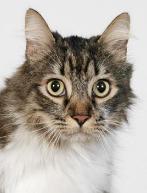
The structure of a tabby cat, however, is not
very that different from that of a tiger. Both
have rounded, bullet-shaped heads, short
faces, large eyes and long, sensitive
whiskers. They have erect, pointed ears,
and most have long tails. Their tongues are
covered with pointed papillae that, in some
big cats, are rough enough to draw blood
with a lick. Silent and graceful, they walk on
their toes. They have five in front and only
four in back. Most cats can draw their
claws into sheaths above the pads of their
feet. Cats are known for their speed, being
among the fastest-moving mammals on earth.
They are agile, have quick reflexes and can
go instantly from total relaxation to fighting
alert.
housecats. The largest, the Siberian tiger,
grows up to fourteen feet long.
The structure of a tabby cat, however, is not
very that different from that of a tiger. Both
have rounded, bullet-shaped heads, short
faces, large eyes and long, sensitive
whiskers. They have erect, pointed ears,
and most have long tails. Their tongues are
covered with pointed papillae that, in some
big cats, are rough enough to draw blood
with a lick. Silent and graceful, they walk on
their toes. They have five in front and only
four in back. Most cats can draw their
claws into sheaths above the pads of their
feet. Cats are known for their speed, being
among the fastest-moving mammals on earth.
They are agile, have quick reflexes and can
go instantly from total relaxation to fighting
alert.

Cats usually travel and hunt alone. Though they are live mostly on the
ground, some climb trees. They are active at night. Meticulous about
cleanliness, cats spend a lot of time grooming, though they don’t
like water.
Most of the 36 cat species are in danger of becoming extinct within the
next 25 years from losing their hunting grounds to agriculture or from
being forced out by natural disasters, killed by hunters, or trapped to
sell.
Big cats are not suited to be pets. Despite the fact that their kittens are
cute and cuddly-looking, they grow up to be wild animals. Those who
buy big cats soon learn just how ill-suited they are, and end up giving
them away to reserves like Big Cats of Serenity Springs, a Colorado
nonprofit which is home to over 120 big cats.
ground, some climb trees. They are active at night. Meticulous about
cleanliness, cats spend a lot of time grooming, though they don’t
like water.
Most of the 36 cat species are in danger of becoming extinct within the
next 25 years from losing their hunting grounds to agriculture or from
being forced out by natural disasters, killed by hunters, or trapped to
sell.
Big cats are not suited to be pets. Despite the fact that their kittens are
cute and cuddly-looking, they grow up to be wild animals. Those who
buy big cats soon learn just how ill-suited they are, and end up giving
them away to reserves like Big Cats of Serenity Springs, a Colorado
nonprofit which is home to over 120 big cats.
Little Cats
Domestic cats have been a part of my
life since I was young. As a child, we
lived on a farm where cats helped
reduce the rodent population in the
barn. My earliest memories of cats is
catching and stroking some of these
near-wild creatures. I caught pinkeye
once and had a ringworm another time
for my enthusiasm.
Cats were domesticated by Egyptians
some 8,000 years ago. Pedigree
breeds weren’t developed until the
19th century. Now there are 300
distinct breeds of domestic cats,
distinguished by their head shapes and
the length of their hair. More breeds
are shorthair than longhair.
The origin of the domestic cat is
questioned, though most think it
resulted from a jungle cat from Africa
mating with a European wild cat For
the most part, domestic cats are just
scaled down and more or less
housebroken versions of big cats.
Domestic cats have been a part of my
life since I was young. As a child, we
lived on a farm where cats helped
reduce the rodent population in the
barn. My earliest memories of cats is
catching and stroking some of these
near-wild creatures. I caught pinkeye
once and had a ringworm another time
for my enthusiasm.
Cats were domesticated by Egyptians
some 8,000 years ago. Pedigree
breeds weren’t developed until the
19th century. Now there are 300
distinct breeds of domestic cats,
distinguished by their head shapes and
the length of their hair. More breeds
are shorthair than longhair.
The origin of the domestic cat is
questioned, though most think it
resulted from a jungle cat from Africa
mating with a European wild cat For
the most part, domestic cats are just
scaled down and more or less
housebroken versions of big cats.