
October 2010
Billie Silvey

Masks around
the World
the World
Africa Most African masks are made of wood. They are used in
religious and social events to represent the ancestors and control forces
of good and evil. They unite people with nature.
religious and social events to represent the ancestors and control forces
of good and evil. They unite people with nature.


Masks are found in almost all
the cultures of the world. They
are used for various
purposes--for religious rites, to
attract animals needed for food,
by actors in drama, by revelers
at parties and balls, and for
decoration.
the cultures of the world. They
are used for various
purposes--for religious rites, to
attract animals needed for food,
by actors in drama, by revelers
at parties and balls, and for
decoration.
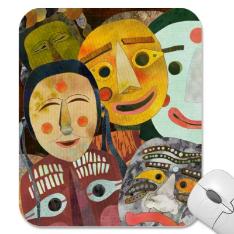
Carved wooden masks painted in bright colors are used in Korea
primarily for dance. They come in different shapes--large,
exaggerated circles, ovals and triangles with long pointed chins.
primarily for dance. They come in different shapes--large,
exaggerated circles, ovals and triangles with long pointed chins.
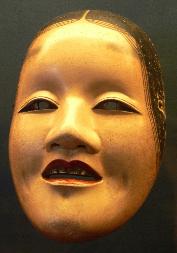
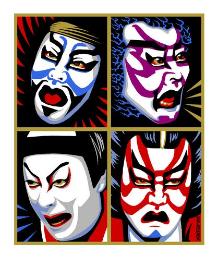
Wood or lacquer masks are used in
Japanese performances of Kabuki
and Noh drama. The art form is
old, sophisticated and stylized, with
Noh masks representing 80
different characters.
Japanese performances of Kabuki
and Noh drama. The art form is
old, sophisticated and stylized, with
Noh masks representing 80
different characters.
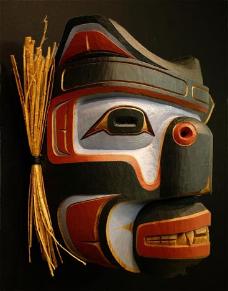
Native American masks,
crafted of wood or leather,
were used for entertainment
or spiritual/medicinal
purposes. Animal-head
masks made by Northwest
tribes gave the person
wearing them the powers
associated with that animal.
crafted of wood or leather,
were used for entertainment
or spiritual/medicinal
purposes. Animal-head
masks made by Northwest
tribes gave the person
wearing them the powers
associated with that animal.
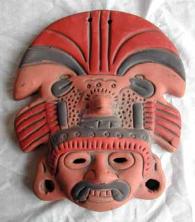
Aztec masks were made for display,
not wearing. The one shown is
ceramic, but others were made of
stones or inlaid with mosaic with teeth
and eyes inserted.
not wearing. The one shown is
ceramic, but others were made of
stones or inlaid with mosaic with teeth
and eyes inserted.
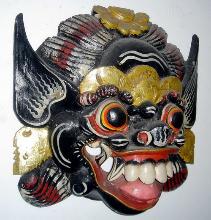
Indonesian masks are from Bali,
Lombok and Java. They symbolize
people, deities and demons and are
used for passing down oral history.
Lombok and Java. They symbolize
people, deities and demons and are
used for passing down oral history.
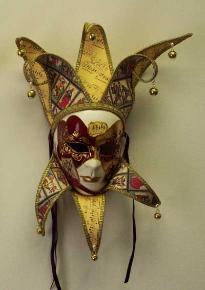
Drawn from a centuries-old tradition,
Venetian masks were made for
carnival and masked balls or to
disguise the identity for social
interactions outside conventions.
Venetian masks were made for
carnival and masked balls or to
disguise the identity for social
interactions outside conventions.
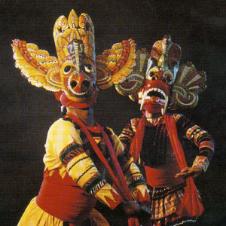
Dating from Sri Lanka's pre-Buddhist
past, masks were worn by shamans
for healing dances.
past, masks were worn by shamans
for healing dances.

As with much of Egyptian culture,
masks were created to be worn by the
dead, not the living. This funerary
mask of a pharaoh was crafted of gold
and precious stones.
masks were created to be worn by the
dead, not the living. This funerary
mask of a pharaoh was crafted of gold
and precious stones.