
September 2011
Billie Silvey

The Peaceful
Use of
Nuclear
Power
Use of
Nuclear
Power
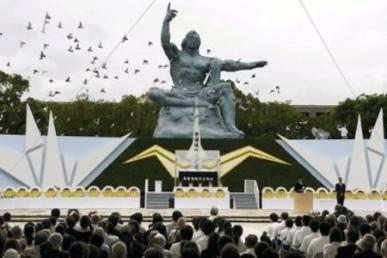
Speaking at the 66th anniversary of the dropping of the atomic
bomb on Nagasaki last month, Naoto Kan, who was prime minister
at the time, promised that Japan would work to become "a society
free of dependence on nuclear power." The occasion was marked
by a moment of silence and the release of doves before the Statue
of Peace at Nagasaki Peace Park (above).
The ceremony was the first time the United States had sent a
representative to the memorial service. Charge d'Affaires James P.
Zumwalt said that President Obama hoped to work with Japan
toward his goal "of realizing a world without nuclear weapons," and
Nagasaki Mayor Tomihisa Taue called on Japan to shift from
nuclear power to renewable energy.
With more than 50 nuclear reactors along its coast, Japan is the
most nuclear reliant nation in the world. The event was a solemn
reminder, not just of the danger of nuclear weapons, but of the risk
posed by the so-called peaceful use of nuclear energy.
It was the first such ceremony since the earthquake and tsunami in
March triggered the meltdown at the Fukushima Daichi nuclear
power plant and showed how vulnerable such plants are. It was
only the most recent in a series of such accidents:
bomb on Nagasaki last month, Naoto Kan, who was prime minister
at the time, promised that Japan would work to become "a society
free of dependence on nuclear power." The occasion was marked
by a moment of silence and the release of doves before the Statue
of Peace at Nagasaki Peace Park (above).
The ceremony was the first time the United States had sent a
representative to the memorial service. Charge d'Affaires James P.
Zumwalt said that President Obama hoped to work with Japan
toward his goal "of realizing a world without nuclear weapons," and
Nagasaki Mayor Tomihisa Taue called on Japan to shift from
nuclear power to renewable energy.
With more than 50 nuclear reactors along its coast, Japan is the
most nuclear reliant nation in the world. The event was a solemn
reminder, not just of the danger of nuclear weapons, but of the risk
posed by the so-called peaceful use of nuclear energy.
It was the first such ceremony since the earthquake and tsunami in
March triggered the meltdown at the Fukushima Daichi nuclear
power plant and showed how vulnerable such plants are. It was
only the most recent in a series of such accidents:
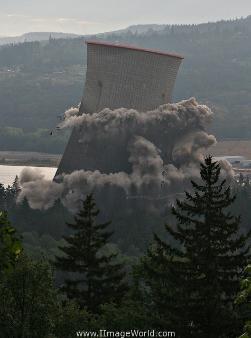
On March 28, 1979, the Three Mile
Island nuclear power plant near
Middletown, PA, suffered the most
serious accident in U.S. commercial
nuclear power plant operating
history. It didn't cause any deaths or
injuries, but it did serve as a wake-up
call that nuclear energy is a powerful
and untameable force--a risk to
workers at the plants and to people
who live in the areas surrounding
them.
It raised the question of whether even
the strictest regulations and oversight
can prevent disasters caused by
human error and mechanical failure.
Island nuclear power plant near
Middletown, PA, suffered the most
serious accident in U.S. commercial
nuclear power plant operating
history. It didn't cause any deaths or
injuries, but it did serve as a wake-up
call that nuclear energy is a powerful
and untameable force--a risk to
workers at the plants and to people
who live in the areas surrounding
them.
It raised the question of whether even
the strictest regulations and oversight
can prevent disasters caused by
human error and mechanical failure.
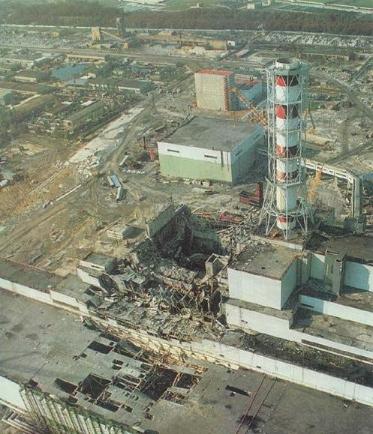
This year is the 25th anniversary of
the accident at Chernobyl in
Ukraine. On April 26, 1986, a
sudden surge of power destroyed
the reactor and released massive
radioactive material into the
atmosphere. Two died within hours,
28 in four months, and 134 suffered
from radiation sickness.
The risk at Chernobyl was
exacerbated by the secrecy
surrounding the Russian government
at the time.
An 18-mile radius around the plant,
including Pripyat, the town where
most of the workers lived, was
evacuated.
People have only recently been able
to visit the area around Chernobyl
and then only briefly and carrying
personal geiger counters.
the accident at Chernobyl in
Ukraine. On April 26, 1986, a
sudden surge of power destroyed
the reactor and released massive
radioactive material into the
atmosphere. Two died within hours,
28 in four months, and 134 suffered
from radiation sickness.
The risk at Chernobyl was
exacerbated by the secrecy
surrounding the Russian government
at the time.
An 18-mile radius around the plant,
including Pripyat, the town where
most of the workers lived, was
evacuated.
People have only recently been able
to visit the area around Chernobyl
and then only briefly and carrying
personal geiger counters.
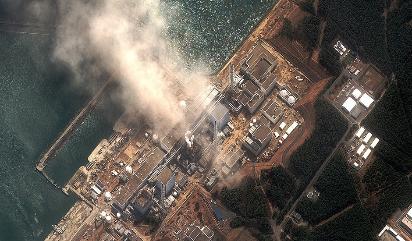
Finally, on March 11, 2011, a series
of equipment failures, nuclear
meltdowns and releases of
radioactive materials at the
Fukushima Nuclear Power Plant
following a 9.0 earthquake and
tsunami created the world's worst
nuclear disaster.
These accidents point to the risks of
nuclear power in any form and our
need to develop safe, sustainable
sources of power.
As citizens and consumers, we need
to be able to be confident that
governments and business leaders
will be honest about the risks
created by their projects and
products. They should do
everything possible to protect
people and their environment.
Profits should never be more
important than safety.
of equipment failures, nuclear
meltdowns and releases of
radioactive materials at the
Fukushima Nuclear Power Plant
following a 9.0 earthquake and
tsunami created the world's worst
nuclear disaster.
These accidents point to the risks of
nuclear power in any form and our
need to develop safe, sustainable
sources of power.
As citizens and consumers, we need
to be able to be confident that
governments and business leaders
will be honest about the risks
created by their projects and
products. They should do
everything possible to protect
people and their environment.
Profits should never be more
important than safety.