
September 2011
Billie Silvey

It was 1954, and the two main players were still reeling from the
shock of what had been done to and by them. Fear--of the invisible,
the overpowering, the distorted--grew in the 50s and 60s out of the
threat of the atom.
Understandably, it started in Japan, with a towering, mindless mutant
beast rampaging through Tokyo. Gojira (better known in America as
Godzilla) was a sea-god created by a nuclear explosion. People were
afraid of something they couldn't even see, so they imagined it as the
greatest, most threatening stuff of nightmares--an unstoppable,
328-foot dinosaur-like creature, at once a monster created by nuclear
tests and a metaphor for nuclear weapons in general.
Ishiro Honda wrote and directed the original movie, which starred
Akira Takarada and was produced by Toho Film Co. Ltd. Godzilla
has a star on the Hollywood Walk of Fame.
1954 was also the year the U.S. came out with a movie set in the
New Mexico desert, the site of the atomic bomb test. Them! starred
James Whitmore, Edmund Gwenn and James Arness and featured
giant ants that threatened Southwestern cities.
In 1959, Stanley Kramer directed Gregory Peck and Ava Gardner in
On the Beach, the story of people facing the destruction of life on
earth.
By 1964's Dr. Strangelove or How I Learned to Stop Worrying
and Love the Bomb, the radiation threat is reduced to the more
human scale of incompetence, aggression and stupidity.
Later movies, like 1979's China Syndrome, starring Jane Fonda and
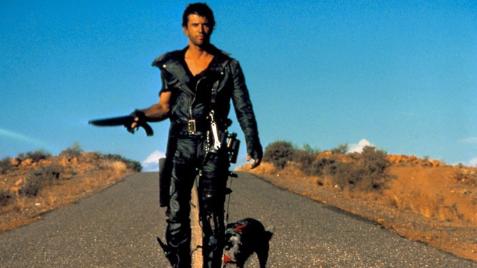
Michael Douglas, emphasized the risk of secrecy. The Mad Max
series (the best is Number 2, Road Warrior) was filmed in Australia
and illustrates the breakdown of society after nuclear devastation.
1989's Fat Man and Little Boy emphasizes the relationship between
Gen. Leslie Groves, played by Paul Newman, and Robert
Oppenheimer, played by Dwight Schultz.
shock of what had been done to and by them. Fear--of the invisible,
the overpowering, the distorted--grew in the 50s and 60s out of the
threat of the atom.
Understandably, it started in Japan, with a towering, mindless mutant
beast rampaging through Tokyo. Gojira (better known in America as
Godzilla) was a sea-god created by a nuclear explosion. People were
afraid of something they couldn't even see, so they imagined it as the
greatest, most threatening stuff of nightmares--an unstoppable,
328-foot dinosaur-like creature, at once a monster created by nuclear
tests and a metaphor for nuclear weapons in general.
Ishiro Honda wrote and directed the original movie, which starred
Akira Takarada and was produced by Toho Film Co. Ltd. Godzilla
has a star on the Hollywood Walk of Fame.
1954 was also the year the U.S. came out with a movie set in the
New Mexico desert, the site of the atomic bomb test. Them! starred
James Whitmore, Edmund Gwenn and James Arness and featured
giant ants that threatened Southwestern cities.
In 1959, Stanley Kramer directed Gregory Peck and Ava Gardner in
On the Beach, the story of people facing the destruction of life on
earth.
By 1964's Dr. Strangelove or How I Learned to Stop Worrying
and Love the Bomb, the radiation threat is reduced to the more
human scale of incompetence, aggression and stupidity.
Later movies, like 1979's China Syndrome, starring Jane Fonda and
Michael Douglas, emphasized the risk of secrecy. The Mad Max
series (the best is Number 2, Road Warrior) was filmed in Australia
and illustrates the breakdown of society after nuclear devastation.
1989's Fat Man and Little Boy emphasizes the relationship between
Gen. Leslie Groves, played by Paul Newman, and Robert
Oppenheimer, played by Dwight Schultz.
Radiation in
Popular Culture
Popular Culture



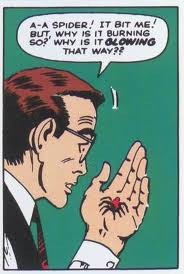
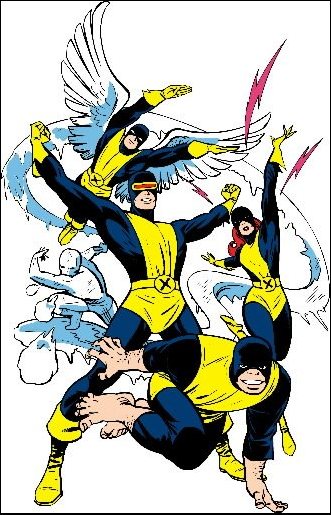
In contrast, comic books use radiation as a
source of exceptional powers that can be
used either for good or evil purposes, as in
Spider-Man, The Incredible Hulk and the
X-Men. These characters have evolved
over the years and been adapted into TV
series and movies.
source of exceptional powers that can be
used either for good or evil purposes, as in
Spider-Man, The Incredible Hulk and the
X-Men. These characters have evolved
over the years and been adapted into TV
series and movies.
Popular culture reflects the ambiguity
of our society toward nuclear energy
as the stuff of both nightmares and
dreams.
of our society toward nuclear energy
as the stuff of both nightmares and
dreams.